Author Archives: Disciple of Christ, Wife, Mommy of 5 blessings & business owner.
The Church has LEFT the Building!
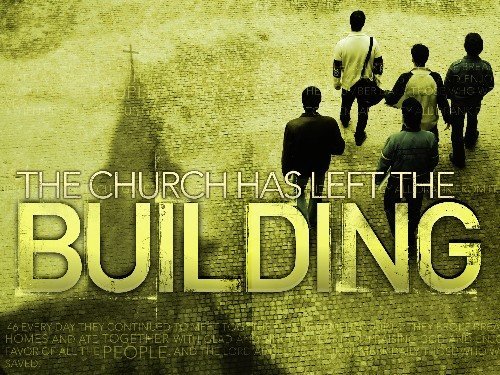
There is a shaking in the making in the body of Christ
Before you read this article, I want you to understand where I stand as far as the meeting place of the body of Christ. IF you have the priviledge to attend a Biblically Sound church PLEASE do so. As I stated later on in the article if we were in Cali, we would be attending John MacArthur’s church. Where there is a biblically sound group of believers we must join them in worship, study and discipleship as God leads. This article was written as God put it on my heart as a warning against FALSE organizations that have gone apostate. I was a member of a church for 4 years who welcomed the ecuumenial movement and allowed false teachers to come in the church and “teach” the flock. This a a warning to the people who are STILL attending an apostate church. I had to make that clear :), now you can read on.
God is separating the sheep from the goats in these very last days of the end time. God is displeased with the institutions who bear the banner of “Christian church” and are leading many astray as they fornicate with the world. The “church” has not gone out to preach the gospel but has invited the world INTO the “church”. There are only 2 options at this point, repentance or judgment. The Lord is calling YOU out of wishy washy churches where His holiness is not exalted, where a life of repentance before the Lord is not taught and where sin runs like it owns the place. Come out of these manmade institutions bearing the false name of Christian churches and return to the Lord in repentance and fear. This is a call to repentance as well as a call to obedience. The church of Christ is not an organization and can’t be found in a building. The believers are the church of Christ. The apostles knew nothing about a “church” organization or building. The great commission was not to go into all the world and “invite people to church” but to go to them and preach the Gospel. I am going to suggest that if there is no organization where you live, where you can receive the unadulterated truth of God’s word, that you look into meeting with fellow believers in a home group, don’t go to an apostate church for the sake of a scripture that has been misunderstood throughout the past 2 thousand years. This scripture is Heb 10:25, which everyone quotes as a means to keep God’s people in apostate churches. We need to go back to the apostolic way of doing things, they did not regard the building where the church met as “high priority” but wherever the “church” met God was there.
Let’s find out what the bible has to say about God’s church…
In the gospel according to Matthew we have the Lord carrying on a conversation with His disciples. He then tells them He was going to build His church on this revelation of who He is. From the beginning we can see its Jesus’ church. He is the builder, and owner. Acts 20:28 says “Take heed therefore unto yourselves, and to all the flock, over which the Holy Ghost hath made you overseers, to feed the church of God, which he hath purchased with his own blood.” The word ‘build’ in Matthew 16:18 comes from the Greek word oikodomeo, which means to be a house-builder, construct or confirm build edify, embolden. So we can see Jesus purchased and is building his church. Next we need to Biblically define church. The Greek word Jesus used for church is ekklesia. This word ekklesia means a calling out, a popular meeting, a religious congregation, assembly. Ekklesia is from ek – “out of” and klesis “a calling” (Kaleo – “to call”). This word church (ekklesia) appears 80 times in the New Testament and every single mention of the “church” those 80 times it refers to the body of believers. The word “churches” appears 37 times in the NT, all but one refers to ekklesia. The only other reference of “churches” also translated “temple” is hierosylos (Strong’s 2417 – guilty of sacrilege, robbing temples) in Acts 19:37. We also see the word “ekklesia” translated as assembly (def. a group of believers) 3 times in the NT and translated as “church/churches” 113 times. The exegetical conclusion is that these words are interchangeable in meaning. If you do a careful and detailed study of the word “assembly” throughout the OT and NT you will find that the word appears 49 times. The word “assembled” appears 36 times in the OT and NT. The NT most common use of “assembled” is synago which means to “gather together, collect” this word appears 73 times in the NT, this is the root word from which we get “synagogue”. The most common translations of “assembled” in the OT are qahal – to gather (Strong’s 6950) and acaph – to gather for any purpose (Strong’s 622). In psalm 74:8 our bibles have “synagogue” as a translation of “moed” in Greek (Strong’s 4159) which by definition is an appointed time, place or meeting. The author of psalm 74 laments the complete destruction of the temple and thus makes a reference to the “place where God met with us”. The word “synagogue” appears 43 times in the NT. All 43 use only 3 different definitions, aposynagogos – excluded from sacred assemblies or excommunicated (Strong’s 656), synagogue – assembling together of men (Strong’s 4864), and archisynagogos – ruler of the synagogue (Strong’s 752).
In order for us to have the biblical perspective on what the “church” is we need to go to Matthew 16:18 “And I tell you that you are Peter,c and on this rock I will build my church, and the gates of Hades will not overcome it.”
Who is the church? The body of Christ alone!
Eph. 1:22-,23 “And He put all things in subjection under His feet, and gave Him as head over all things to the church, which is His body, the fullness of Him who fills all in all.”
Eph. 5:23 “For the husband is the head of the wife, as Christ also is the head of the church, He Himself being the Savior of the body.”
Jesus Christ himself is the architect of this ekklesia. Over the past two thousand years the term church has been misused and misrepresented far and wide. Satan has been using this deception in order to keep believers in apostate churches quoting Heb. 10:25. “not forsaking our own assembling together, as is the habit of some, but encouraging one another; and all the more as you see the day drawing near.” The word “assembling” is Strong’s 1997 – episunagoge which is a noun and it appears only one more time throughout the entire NT in 2 Thess. 2:1 speaking of the “gathering together” in the rapture of the ekklesia. Nowhere in Scripture will we find the term ekklesia used to describe an organization, an institution, denomination, or a building. The church (ekklesia) is a living organism made up with lively stones of Spirit filled believers. Church is not something we do, nor is it a place we go. As believers we need to establish in our hearts that we are the church, and where we go the church goes.
Howbeit the most High dwelleth not in temples made with hands; as saith the prophet, Heaven is my throne, and earth is my footstool: what house will ye build me? saith the Lord: or what is the place of my rest? (Acts 7:48:49)
Let us look at some other translations of Matthew 16:18
The “Hebrews Names Version” translates Matthew 16:18 as follows: “I also tell you that you are Kefa, and on this rock I will build my assembly, and the gates of Sheol will not prevail against it”
William Tyndale who translated the New Testament into English in 1526, and paid for it with his life, translated Matthew 16:18 as follows: “And I say also unto thee, that thou art Peter. And upon this rock I will build my congregation: and the gates of hell shall not prevail against it.
The “Analytical-Literal Translation” of the New Testament words Matthew 16:18 as follows: “Now I also say to you that you are Peter [“a stone”], and on this solid rock I will build my Assembly [or, Church], and [the] gates of the realm of the dead [Gr., hades] will not prevail against it.”
This word “ekklesia” in the New Testament was not a religious word. Ekklesia is used 116 times in the New Testament. Of those 116 times it is translated church or churches 113 times. The other three times it is translated assembly.
In the Acts 19 where Paul, was threatened by an angry mob who wanted to kill him Luke, the writer of Acts, uses the word, ekklesia and the translators of the King James Version translated it “assembly.”
And when Paul would have entered in unto the people, the disciples suffered him not. And certain of the chief of Asia, which were his friends, sent unto him, desiring him that he would not adventure himself into the theatre. Some therefore cried one thing, and some another: for the assembly (ekklesia) was confused; and the more part knew not wherefore they were come together. And they drew Alexander out of the multitude, the Jews putting him forward. And Alexander beckoned with the hand, and would have made his defense unto the people. But when they knew that he was a Jew, all with one voice about the space of two hours cried out, “great is Diana of the Ephesians”. And when the town clerk had appeased the people, he said, Ye men of Ephesus, what man is there that knoweth not how that the city of the Ephesians is a worshipper of the great goddess Diana, and of the image which fell down from Jupiter? Seeing then that these things cannot be spoken against, ye ought to be quiet, and to do nothing rashly. For ye have brought hither these men, which are neither robbers of churches, (hierosulos) nor yet blasphemers of your goddess. Wherefore if Demetrius, and the craftsmen which are with him, have a matter against any man, the law is open, and there are deputies: let them implead one another. But if ye inquire anything concerning other matters, it shall be determined in a lawful assembly (ekklesia). For we are in danger to be called in question for this day’s uproar, there being no cause whereby we may give an account of this concourse. And when he had thus spoken, he dismissed the assembly (ekklesia). (Acts 19:30-41) (Greek word inserts and emphasis mine) The interesting thing about this passage is that the word assembly in the original language is ekklesia in all three occurrences. Ekklesia just happens to be the word we use to translate, “church.” We can see from the Scripture ekklesia is used to describe an assembly of people.
First, it was a confused ekklesia, then their inquiring would need to be done in a lawful ekklesia, and lastly the ekklesia was dismissed. Yet, when describing a building as a temple Luke used the Greek word hierosulos. So when Jesus used ekklesia to say “I will build my church.” It was not a religious word. It simply meant a called out group, or crowd, or fellowship, or assembly. The only place in the New Testament where churches is translated using a different word other than ekklesia is in Acts 19:37 and the Greek word hierosulos is used and it means temple. After all it was in Ephesus where the crowd or assembly (ekklesia) was concerned about the temple of Diana. If the church was a building, an institution, organization, or denomination surely Jesus would have used hierosulos or some other word and not ekklesia.
He saith unto them, But whom say ye that I am? And Simon Peter answered and said, Thou art the Christ, the Son of the living God. And Jesus answered and said unto him, Blessed art thou, Simon Barjona: for flesh and blood hath not revealed it unto thee, but my Father which is in heaven. And I say also unto thee, That thou art Peter, and upon this rock I will build my church; and the gates of hell shall not prevail against it. (Matthew 16:15-18)
The Lord himself is erecting the building and he is doing it with people. The apostle Peter said the following concerning the people of God and the building of the church
“Ye also, as lively stones, are built up a spiritual house, an holy priesthood, to offer up spiritual sacrifices, acceptable to God by Jesus Christ.” (1 Peter 2:5)
The word house in first Peter comes from the Greek word oikos, which means “a dwelling” The New Testament temple of God is living breathing Spirit filled people.
Know ye not that ye are the temple of God, and that the Spirit of God dwelleth in you? (1 Corinthians 3:16)
What? know ye not that your body is the temple of the Holy Ghost which is in you, which ye have of God, and ye are not your own? (1 Corinthians 6:19)
Now therefore ye are no more strangers and foreigners, but fellow citizens with the saints, and of the household of God; And are built upon the foundation of the apostles and prophets, Jesus Christ himself being the chief corner stone; In whom all the building fitly framed together groweth unto an holy temple in the Lord: In whom ye also are built together for an habitation of God through the Spirit. (Ephesians 2:19-22) Let us always be mindful the church (ekklesia) is people (a living organism with Christ as the head) and not hierosulos. (A Building).The idea of the church being a building is foreign the early church. The church is people, always has been, and the early church meet many places among them was house to house. It doesn’t matter where a church meets, it could be at a beautiful new building or under a palm tree. What matters is that the body of Christ follows the early church’s example in a committed love for the Lord, one another and for sound doctrine.
What are we to do when we live in a lukewarm church dispensation? Where are we to go when we can’t find a sound bible teaching church in town? Are we to just isolate ourselves from fellow believers or are we to form bible studies and home groups with the sole purpose of coming together to worship the creator in spirit and truth? The latter is the biblical option. God does NOT support the choice of any of his children belonging to the synagogue of Satan. If an institution is not teaching biblically sound doctrine (only few are), then we MUST go back to the apostolic way of sharing the gospel through evangelism, prayer, coming together to edify, share the burdens, rejoice with other believers and now that we have been blessed with the bible commit to studying the scriptures as 2 Tim 2:15 “Be diligent to present yourself approved to God as a workman who does not need to be ashamed, accurately handling the word of truth.” How can we correctly handle the word of truth in the synagogue of Satan? The church of Laodicea is the last church of the 7 Jesus wrote to in the book of Revelation. This is the worst of all 7 churches. Jesus had nothing good to say about them. These 7 churches are the 7 spiritual conditions that exist and out of the 7 this one makes the Lord so sick to the point of vomiting. Why? Because they are neither cold (rejecting the gospel completely) nor hot (saved, part of the body of Christ), this church is the “pretender church” the church that claims by mouth they are Christian yet have NOTHING to do with the real ekklesia of Christ. This is the church that has some outward or nominal Christianity yet are the ones the Lord says “depart from me, you worker of iniquity. I never knew you”. Among those that are part of this group are JW, Mormons, Pentecostals, Catholics, the modern day emerging church and many charismatic churches. They are accursed because they teach another gospel. Joel Osteen, Rob Bell, Rick Warren, Joyce Meyer, Creflo Dollar, T.D. Jakes and countless (too many to name) others who are teaching heresy. We ought to remove ourselves from the communion of such people, especially when they claim to be believer’s and yet live a life of sin and doctrinal error. 2 Cor 6:14 “Do not be bound together with unbelievers; for what partnership have righteousness and lawlessness, or what fellowship has light with darkness? 15 Or what harmony has Christ with Belial, or what has a believer in common with an unbeliever? 16 Or what agreement has the temple of God with idols? For we are the temple of the living God; just as God said, “I WILL DWELL IN THEM AND WALK AMONG THEM; AND I WILL BE THEIR GOD, AND THEY SHALL BE MY PEOPLE. 17 “Therefore, COME OUT FROM THEIR MIDST AND BE SEPARATE,” says the Lord. “AND DO NOT TOUCH WHAT IS UNCLEAN; And I will welcome you.” This verse is speaking of a business partnership. What business do YOU have with the unclean? What business and/or fellowship do you have with those who mock God by teaching falsehood?
What about that meeting place? If we look into Scripture we will see the early church met in homes. This idea is truly Biblical. It is a practice that the church needs to return to at the prospect of heretic teaching. Some have and more are following. The idea of church in homes is a new concept to many in twenty-first century America. Yet, this concept had its origin in first century Christianity. Scripture is full of examples of Christ healing, teaching, and ministering in private homes. As Jesus grew and began his public ministry it took him many places, and the Scriptures give us ample examples of Jesus preaching, teaching, and healing in private homes. And it came to pass, as Jesus sat at meat in the house, behold, many publicans and sinners came and sat down with him and his disciples. (Matthew 9:10)
And again he entered into Capernaum after some days; and it was noised that he was in the house. And straightway many were gathered together, insomuch that there was no room to receive them, no, not so much as about the door: and he preached the word unto them. (Mark 2:1-2)
Now it came to pass, as they went, that he entered into a certain village: and a certain woman named Martha received him into her house. And she had a sister called Mary, which also sat at Jesus’ feet, and heard his word. (Luke 10:38-39)
When the time came for the Lord to hold the Passover which turned into the Lord’s Supper he also chose to hold it in a private home. He could have chose some place that had a religious significance; however he chose to celebrate it in a common ordinary house, and by doing so Jesus Christ gave his approval for the church (ekklesia) meeting in homes or whever else they had the opportunity to.
And he said, Go into the city to such a man, and say unto him, The Master saith, “My time is at hand; I will keep the Passover at thy house with my disciples”. (Matthew 26:18)
Jesus spent three years teaching and training his apostles to carry on the work he began, and when he sent them forth after his resurrection they began by meeting in homes. In The Book of Acts (which is the history of the early church) we can clearly see the early Christians met in private homes. The New Testament Church was born at Pentecost, and it began in the “upper room” of someone’s home. And when the day of Pentecost was fully come, they were all with one accord in one place. And suddenly there came a sound from heaven as of a rushing mighty wind, and it filled all the house where they were sitting. And there appeared unto them cloven tongues like as of fire, and it sat upon each of them. And they were all filled with the Holy Ghost, and began to speak with other tongues, as the Spirit gave them utterance. (Acts 2:1-4) Jesus could have chosen some other place for them to meet and pour out His Spirit like the temple in Jerusalem or a synagogue but he chose a home. After Peter preached the first message of the New Testament era three thousand souls were added to the church in a single day, (Acts 2:41) and there was no attempt by any of the apostles to build a “Church Building.” Rather the early church would meet in the temple court yard and in private homes.
And they, continuing daily with one accord in the temple, and breaking bread from house to house, did eat their meat with gladness and singleness of heart. (Acts 2:46)
As the apostles continued preaching and teaching the things concerning the kingdom of God five thousand others believed, and where added to the church (ekklesia).
Howbeit many of them which heard the word believed; and the number of the men was about five thousand. (Acts 4:4)
Shortly after (Acts 5) the Bible says “and believers were the more added.” The word of God refers to the more added as “multitudes both of men and women”. Yet, the early church (ekklesia) continued to meet in homes of people.
And believers were the more added to the Lord, multitudes both of men and women. Insomuch that they brought forth the sick into the streets, and laid them on beds and couches, that at the least the shadow of Peter passing by might overshadow some of them. There came also a multitude out of the cities round about unto Jerusalem, bringing sick folks, and them which were vexed with unclean spirits: and they were healed every one. (Acts 5:14-16)
Even when the great persecuted began Saul had to enter into the homes of believers to arrest them (Acts 8).
As for Saul, he made havoc of the church, entering into every house, and haling men and women committed them to prison. (Acts 8:3)
Scripture declares that Saul of Tarsus went into homes to find “the church” to drag them to prison. Then after his conversion he would be found planting churches that would meet in private homes including his own rented house.
And some of them were men of Cyprus and Cyrene, which, when they were come to Antioch, spoke unto the Grecians, preaching the Lord Jesus. And the hand of the Lord was with them: and a great number believed, and turned unto the Lord. Then tidings of these things came unto the ears of the church which was in Jerusalem: and they sent forth Barnabas that he should go as far as Antioch. Who, when he came, and had seen the grace of God, was glad, and exhorted them all, that with purpose of heart they would cleave unto the Lord. For he was a good man, and full of the Holy Ghost and of faith: and much people was added unto the Lord. (Acts 11:20-24)
Scripture declares the early church grew by leaps and bounds they truly had revival. We have seen from Scripture that an untold number of believers were added. The Book of Acts records these events with the use of words like “thousands” “multitudes” and “much people.” Churches (local expressions of ekklesia) were everywhere. The Book of Acts doesn’t record the whereabouts of all the apostles going forth and planting churches, but we know they did, yet we have no record of any of them starting a building program. The record we do have (Paul) shows the church (ekklesia) meeting in homes.
Acts 20:20 And how I kept back nothing that was profitable unto you, but have showed you, and have taught you publicly, and from house to house,
Greet Priscilla and Aquila my helpers in Christ Jesus: Who have for my life laid down their own necks: unto whom not only I give thanks, but also all the churches of the Gentiles. Likewise greet the church that is in their house. (Romans 16:3-5)
The churches of Asia salute you. Aquila and Priscilla salute you much in the Lord, with the church that is in their house. (1 Corinthians 16:19)
Epaphras, who is one of you, a servant of Christ, salutes you, always laboring fervently for you in prayers that ye may stand perfect and complete in all the will of God. For I bare him record, that he hath a great zeal for you, and them that are in Laodicea and them in Hierapolis. Luke, the beloved physician, and Demas, greet you. Salute the brethren which are in Laodicea, and Nymphas, and the church which is in his house. (Colossians 4:12-15)
Paul, a prisoner of Jesus Christ, and Timothy our brother, unto Philemon our dearly beloved, and fellowlaborer, And to our beloved Apphia, and Archippus our fellowsoldier, and to the church in thy house: (Philemon 1:1-2)
The early Christians knew they were the church. Church wasn’t a place for them to go, and neither was it something they did.
Know ye not that ye are the temple of God, and that the Spirit of God dwelleth in you? If any man defile the temple of God, him shall God destroy; for the temple of God is holy, which temple ye are. (1 Corinthians 3:16-17)
What? know ye not that your body is the temple of the Holy Ghost which is in you, which ye have of God, and ye are not your own? (1 Corinthians 6:19)
And what agreement hath the temple of God with idols? for ye are the temple of the living God; as God hath said, I will dwell in them, and walk in them; and I will be their God, and they shall be my people. (2 Corinthians 6:16)
Now therefore ye are no more strangers and foreigners, but fellowcitizens with the saints, and of the household of God; And are built upon the foundation of the apostles and prophets, Jesus Christ himself being the chief corner stone; In whom all the building fitly framed together groweth unto an holy temple in the Lord: In whom ye also are built together for an habitation of God through the Spirit. (Ephesians 2:19-22)
The word temple in these verses is referring to that holy or sacred place. Nowhere in the New Testament is there the idea or concept that some special building constructed by man is the church. It is not the temple, and it is not a special holy place. There is nothing special about that building. You can call it a sanctuary all you want to, but the truth of the matter is it leaves people thinking the building is the church. The apostle Paul told the early believers over and over they were the temple of God.
Of historical note: “The first recorded use of the word ekklesia (church) to refer to a Christian meeting place was penned around A.D. 190 by Clement of Alexander (150-215). Clement is the first person to use the phrase “go to church” which was a foreign thought to the first century believers.”
Any student of history will tell you that in the fourth century with the rise of Emperor Constantine great changes were brought into the church, most of them with origins in paganism. Then to add insult to injury money from state funds was used to build special buildings (now called churches).
Furthermore, Centralized congregational assembly with an officiating priesthood is a former thing. God’s wisdom provided a dramatic and vivid demonstration; the former building-as-a-tabernacle was erased, the temple dismantled for God does not dwell there any longer. The former building tabernacle/temple has been replaced with the substance it foreshadowed; a body. A new experiential dimension has been provided. A righteous lamb and a substitutionary death made a way. A wall of separation was removed, to bring us as individuals into a shared experience among all other members of a singular body, fitly joined together, with every joint supplying. Every born-again Christian is part of God’s abode, part of the singular tabernacle in which God dwells, his own body, made without any man’s handiwork. To return again to the former things would be to deny the anointing that establishes the new.
Finally, Christianity was declared to be the state religion. While all this was taking place, The Edict of Milan came into being which resulted in thousands of pagans “joining” the church because it was politically correct, after all their Emperor embraced Christianity. This great influx resulted in the adoption of many false doctrines and practices. They (Constantine and the pagan masses) were never spiritually converted. The final result, many pagan practices were woven into Christianity, changing it to the point the apostles would find it unrecognizable. From Constantine onwards the state began to mingle in church affairs. The saddest part is many of these customs, traditions and practices are still in the church today.
Finding a fellowship of true believers becomes an issue when you have more apostate church organizations than you have biblically sound ones. We live in the church age of Laodicea, you can clearly see this by the alarming growth of the “prosperity” gospel preaching, the ME centered preaching. Most of these institutions are preaching either a “better you now”, steps for success, Jesus wants you rich, baptism of the Holy Spirit with evidence of speaking in some pagan babble, easy believism gospel, you know the type where they tell you “if you want eternal life in heaven, believe in Jesus, accept Jesus, recite this prayer and mean it in your heart” and then they welcome you into the family of God as if they knew what’s in your heart, if you are a true convert or not. The institutions that are concerned about being relevant to THIS generation and are “relationship centered”. These “relationship centered” places are here to connect you to Jesus as if Jesus was something to be “connected” to. Institutions that believe they have an anointing to heal (blasphemy indeed), for ONLY God is the healer. Institutions that do not take the word of God literally but allegorize scripture and the emerging church who seems to believe they are the epitome of humility by saying they have no idea what the Bible says and who can know for it is too “high of a knowledge” to attain. As if ignorance was a humble attribute. This is glorified ignorance at it’s best. The emergent “church” doesn’t want clarity as to what the bible states because they do not like what it says. They would have to change if they were to know what it said, so they claim ignorance. John 3:19 “This is the judgment, that the Light has come into the world, and men loved the darkness rather than the Light, for their deeds were evil.” They sanctify the culture, they believe “If we’re going to change these people we must become like these people”. They allow the culture to dictate what Christianity should be. They wish to be as relevant as they can be in order to reach as many as they can always being politically correct in order NOT to offend anyone. They state that Christianity must adapt itself in order to reach unbelievers.
For those of you who will say, “that’s what satan wants, to dismantle the church” I have this to say.
How could Satan convince believers that the Church was going apostate? Don’t you think believers know when the Church is going apostate? Didn’t Popery try to convince the men of the Reformation that the Church was not going apostate? But they weren’t convinced, were they?
What satan does try to convince professing christians that the Church is not going apostate, and that these ministers are ministers of righteousness. 2 Corinthians 11:13 “For such men are false apostles, deceitful workers, disguising themselves as apostles of Christ. 14No wonder, for even Satan disguises himself as an angel of light. 15Therefore it is not surprising if his servants also disguise themselves as servants of righteousness, whose end will be according to their deeds”.
Satan destroys the Church by his seducing the unfaithful to worship him there, not by dismantling it. When we carefully study scripture we find that his intention is to reign (rule) in the Church. To be lifted up above God and worshiped there. He is already prince of this world, he wants to be prince of the Church also. There is no need to speculate about his tactics in deceiving, Satan has a long history we can refer to. He will do the same that he’s been doing since the beginning. Fomenting lawlessness and inciting disobedience to God’s Word. That’s his tactic.
Genesis 3:1-4•”Now the serpent was more subtil than any beast of the field which the LORD God had made. And he said unto the woman, Yea, hath God said, Ye shall not eat of every tree of the garden?
•And the woman said unto the serpent, We may eat of the fruit of the trees of the garden:
•But of the fruit of the tree which is in the midst of the garden, God hath said, Ye shall not eat of it, neither shall ye touch it, lest ye die.
•And the serpent said unto the woman, Ye shall not surely die:
•For God doth know that in the day ye eat thereof, then your eyes shall be opened, and ye shall be as gods, knowing good and evil.”
Satan uses humanistic reasoning with man to deny God’s clearly spoken Word, that they would be beguiled. This is Satan’s Modus Operandi. To take God’s unambiguous Word, and playing upon man’s vulnerability, wrest and distort it so that it’s palatable to man, for his own purposes. So if he wants to rule the Church, he says,
..sin in the Church is really not that bad,
..don’t worry about sin, God is love and will forgive,
..we’re no longer under law, you have liberty,
..you can do it, and you shall have peace,
..follow your Church tradition, and it’s leaders,
..you must not leave an apostate Church,
..there will be no judgment on God’s Church,
..etc., etc.
This is the ear-candy that people want to hear. Smooth things, things which are palatable. Prophesies that are not faithful things, but that are smooth things, deceitful or dishonest prophesies. And Satan accomplishes this by having “his ministers” appear in the Church as wolves in sheep’s clothing, saying Peace, Peace. Declaring how “things are not so bad,” and in their building a sub-standard temple with sub-standard material in wood, hay, and stubble, giving them a false sense of security. This is how Satan works.
Ezekiel 13:6-11
•”They have seen vanity and lying divination, saying, The LORD saith: and the LORD hath not sent them: and they have made others to hope that they would confirm the word.
•Have ye not seen a vain vision, and have ye not spoken a lying divination, whereas ye say, The LORD saith it; albeit I have not spoken?
•Therefore thus saith the Lord GOD; Because ye have spoken vanity, and seen lies, therefore, behold, I am against you, saith the Lord GOD.
•And mine hand shall be upon the prophets that see vanity, and that divine lies: they shall not be in the assembly of my people, neither shall they be written in the writing of the house of Israel, neither shall they enter into the land of Israel; and ye shall know that I am the Lord GOD.
•Because, even because they have seduced my people, saying, Peace; and there was no peace; and one built up a wall, and, lo, others daubed it with untempered morter:
•Say unto them which daub it with untempered morter, that it shall fall: there shall be an overflowing shower; and ye, O great hailstones, shall fall; and a stormy wind shall rend it.”
This is the end of Satan’s ministers who attack not the world (his own) but the Church.
Have you ever thought that there is a reason why the Lord allowed the temple to be brought down brick by brick by the romans and there is NO “temple” in Jerusalem right now? Are we like the Jewish people who are running to the former things? They are planning to rebuild the temple in order to start sacrificial offerings to a God that has done away with that system. Christians are going back to the tabernacle times when the Lord has replaced his dwelling in the holies of holies to the body of a believer. Modern “church institutions” are corrupt, satan had invaded and resides in most churches today. God is calling you out to be a separate people, to be a holy people consecrated unto Him.
Beloved, I plead with you not to take my word for it but to seek God’s will in the matter. God has spoken to me and my duty is to deliver the message, now it is your duty to take what you have read and seek the will of God. I strongly believe that we’re living in the very last days and we need to go back to how the apostles carried out the great commission. In a world where 99% of organizations are apostate, we can take refuge in the way the apostles ministered and how the body of Christ grew. By no means am I advocating to leave a congregation of believers if sound doctrine is taught. I wish I would be able to be part of John MacArthur’s church, I would attend in a heartbeat with the spirit of a servant. If you have a sound group of believers you are a part of, serve as Jesus would, pray for them as Jesus commanded and be as faithful as our Lord was to His apostles. The reality remains my friend, the chances of any of us finding such group of believers is 1 in a million.
PS. Most “church buildings” are designed according to tradition that perpetuates the notion that it is a sacred place. Instead of it just being a room where people meet to fellowship and worship, it has some mystical aura attached to it. We even require different behavior when entering these “holy” places. I cringe when I hear people refer to a building as “the house of God” or refer to the meeting room as “the sanctuary.” NOTHING could be further from the truth!
Resources…
A Biblical Church by Paul Washer.
Reformation Leaders. Some murdered by the Roman Catholic Church.
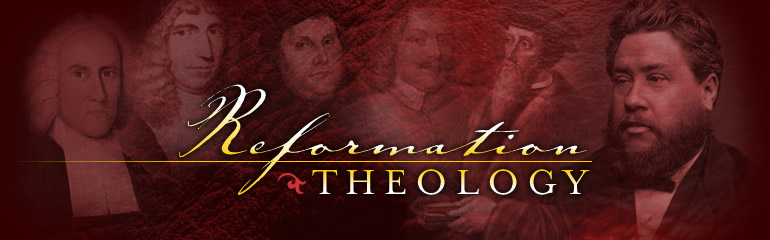
Reformed Theology and protestant reformation leaders, some whom were murdered by the Roman catholic church.
John Calvin was an influential French theologian and pastor during the Protestant Reformation. He was a principal figure in the development of the system of Christian theology later called Calvinism. Originally trained as a humanist lawyer, he broke from the Roman Catholic Church around 1530. After religious tensions provoked a violent uprising against Protestants in France, Calvin fled to Basel, Switzerland, where he published the first edition of his seminal work Institutes of the Christian Religion in 1536. Calvin was influenced by the Augustinian tradition, which led him to expound the doctrine of predestination and the absolute sovereignty of God in salvation of the human soul from death and eternal damnation. His writings and preachings provided the seeds for the branch of theology that bears his name. The Reformed and Presbyterian churches, which look to Calvin as a chief expositor of their beliefs, have spread throughout the world.
Calvin’s Theology in a nutshell.
Calvin developed his theology in his biblical commentaries as well as his sermons and treatises, but the most concise expression of his views is found in his magnum opus, the Institutes of the Christian Religion. He intended that the book be used as a summary of his views on Christian theology and that it be read in conjunction with his commentaries.The various editions of that work span nearly his entire career as a reformer, and the successive revisions of the book show that his theology changed very little from his youth to his death. The first edition from 1536 consisted of only six chapters. The second edition, published in 1539, was three times as long because he added chapters on subjects that appear in Melanchthon’s Loci Communes. In 1543, he again added new material and expanded a chapter on the Apostles’ Creed. The final edition of the Institutes appeared in 1559. By then, the work consisted of four books of eighty chapters, and each book was named after statements from the creed: Book 1 on God the Creator, Book 2 on the Redeemer in Christ, Book 3 on receiving the Grace of Christ through the Holy Spirit, and Book 4 on the Society of Christ or the Church.
Title page from the final edition of Calvin’s magnum opus, Institutio Christiane Religionis, which summarises his theology.
The first statement in the Institutes acknowledges its central theme. It states that the sum of human wisdom consists of two parts: the knowledge of God and of ourselves. Calvin argues that the knowledge of God is not inherent in humanity nor can it be discovered by observing this world. The only way to obtain it is to study scripture. Calvin writes, “For anyone to arrive at God the Creator he needs Scripture as his Guide and Teacher.” He does not try to prove the authority of scripture but rather describes it as autopiston or self-authenticating. He defends the trinitarian view of God and, in a strong polemical stand against the Catholic Church, argues that images of God lead to idolatry. At the end of the first book, he offers his views on providence, writing, “By his Power God cherishes and guards the World which he made and by his Providence rules its individual Parts.” Humans are unable to fully comprehend why God performs any particular action, but whatever good or evil people may practise, their efforts always result in the execution of God’s will and judgments.
The second book includes several essays on the original sin and the fall of man, which directly refer to Augustine, who developed these doctrines. He often cited the Church Fathers in order to defend the reformed cause against the charge that the reformers were creating new theology.In Calvin’s view, sin began with the fall of Adam and propagated to all of humanity. The domination of sin is complete to the point that people are driven to evil. Thus fallen humanity is in need of the redemption that can be found in Christ. But before Calvin expounded on this doctrine, he described the special situation of the Jews who lived during the time of the Old Testament. God made a covenant with Abraham and the substance of the promise was the coming of Christ. Hence, the Old Covenant was not in opposition to Christ, but was rather a continuation of God’s promise. Calvin then describes the New Covenant using the passage from the Apostles’ Creed that describes Christ’s suffering under Pontius Pilate and his return to judge the living and the dead. For Calvin, the whole course of Christ’s obedience to the Father removed the discord between humanity and God.
In the third book, Calvin describes how the spiritual union of Christ and humanity is achieved. He first defines faith as the firm and certain knowledge of God in Christ. The immediate effects of faith are repentance and the remission of sin. This is followed by spiritual regeneration, which returns the believer to the state of holiness before Adam’s transgression. However, complete perfection is unattainable in this life, and the believer should expect a continual struggle against sin. Several chapters are then devoted to the subject of justification by faith alone. He defined justification as “the acceptance by which God regards us as righteous whom he has received into grace.”In this definition, it is clear that it is God who initiates and carries through the action and that people play no role; God is completely sovereign in salvation. Near the end of the book, Calvin describes and defends the doctrine of predestination, a doctrine advanced by Augustine in opposition to the teachings of Pelagius. Fellow theologians who followed the Augustinian tradition on this point included Thomas Aquinas and Martin Luther. The principle, in Calvin’s words, is that “God adopts some to the hope of life and adjudges others to eternal death.”
The final book describes what he considers to be the true Church and its ministry, authority, and sacraments. He denied the papal claim to primacy and the accusation that the reformers were schismatic. For Calvin, the Church was defined as the body of believers who placed Christ at its head. By definition, there was only one “catholic” or “universal” Church. Hence, he argued that the reformers, “had to leave them in order that we might come to Christ.” The ministers of the Church are described from a passage from Ephesians, and they consisted of apostles, prophets, evangelists, pastors, and doctors. Calvin regarded the first three offices as temporary, limited in their existence to the time of the New Testament. The latter two offices were established in the church in Geneva. Although Calvin respected the work of the ecumenical councils, he considered them to be subject to God’s Word, the teaching of scripture. He also believed that the civil and church authorities were separate and should not interfere with each other.
Calvin defined a sacrament as an earthly sign associated with a promise from God. He accepted only two sacraments as valid under the new covenant: baptism and the Lord’s Supper (in opposition to the Catholic acceptance of seven sacraments). He completely rejected the Catholic doctrine of transubstantiation and the treatment of the Supper as a sacrifice. He also could not accept the Lutheran doctrine of sacramental union in which Christ was “in, with and under” the elements. His own view was close to Zwingli’s symbolic view, but it was not identical. Rather than holding a purely symbolic view, Calvin noted that with the participation of the Holy Spirit, faith was nourished and strengthened by the sacrament. In his words, the eucharistic rite was “a secret too sublime for my mind to understand or words to express. I experience it rather than understand it.”
The Marian Doctrine.
To Calvin, Mary is an idol in the Roman Church, and she diminishes the centrality and importance of Jesus. Hence, his Genevan Catechism not only outlawed Marian veneration, it also punished related behavior, such as carrying a rosary, observing a saints day, or possessing holy relics. Regarding Marian relics, Calvin commented in an ironical way that since the Papists had assumed her to be in heaven, at least nobody can claim to have Marian relics, otherwise there would be so many Marian bones in circulation, that a huge new cemetery could be filled with them.
Calvin on salvation.
Calvin was convinced of man’s smallness and God’s immensity. No amount of good works of the little creature could possibly ensure his salvation, which only God can will. Calvin believed that all salvation is determined by him, who determined long before creation, who is to be saved and who is to be damned. Because all salvation depends exclusively on the will of God and the salvation works of his son Jesus Christ, Calvin rejects any notion of Mary as a participant in the mystery of salvation.He wonders why to some Jesus Christ alone is not sufficient, and calls this pure defiance. Therefore Roman Catholic veneration is idolatry, because Mary is honoured with titles like « mediator » « our hope » « our life » and our light. Thus, Calvin rejects prayers and supplications to Mary. We should pray for each other in this world, but, according to Calvin, calling on the dead is not a biblical concept. Once God damns a person, he is damned. Calvin’s theology has no room for purgatory, as there is no in between place for an eventual salvation. And therefore, Calvin does not permit prayer for the dead, as their fate is sealed.To call on Mary for salvation is nothing but blasphemy “exsecrabilis blasphemia”, because God alone has predestinated the amount of grace to each individual in his absolute will.
There are several doctrinal beliefs in which Calvin and I differ, but for the most part his theology stands true when place side to side with scripture.
Johannes Gutenberg ~ Inventor of the printing press, the first book printed was a latin language bible. He never received any dividens for his invention and passed away in poverty. It is said that if a Gutenberg Bible would come into the world market it would be worth $100 million. Without the printing predd the protestant reformation would have not been possible.
William Tyndale ~ Was influenced by Erasmus who was the first person to ever translate the New Testament from latin to greek and Martin Luther. Tyndale was the first to translate considerable parts of the NT from greek to english for the common person to read. He was tried and charged with heresy for his translating work and burned at the stake.
John Wycliffe ~ Founder of the Lollard movement, a precursor to the Protestant Reformation for this reason, he is sometimes called “the morning star” of the reformation. He translated the NT from the vulgate into vernecular English in the year 1382. The catholic church declared Wycliffe (on May 4th, 1415) a stiff-necked heretic and under the ban of the church. It was declared that his books be burned and his remains exhumed. Pope Martin V commanded that his remains were dug up, burned and the ashes cast into the River Swift.
Patrick Hamilton ~ Early protestant reformer in Sottland. He was tried as a heretic by Archbishop James Beaton and burned at the stake in St. Andrews. He burned from noon to 6pm. His heresy? Challenging the catholic church’s position as “sole” interpretive authority of the bible.
During the reformation the Roman catholic church help and defended the position that no common man should be able to neither own or read the bible by themselves. They argued that this would only confuse them since the “correct” interpretation could only be done by the Catholic church’s priests. So, the catholic church persecuted, tried as heretic and condemned to death anyone who tried to translate the bible in the language of the people. Anyone that challenged the catholic church’s “traditions” and “man made doctrines” imposed on the people (who have very faint knowledge of scripture themselves) with the truth of scripture was labeled a HERETIC of the worst kind.
John Knox ~ Considered the founder of the presbyterian denomination in Scottland fled England when Mary Tudor ascended to the throne and re-established Roman Catholicism. He moved to Geneva where he met John Calvin from whom he gained experience and knowledge of Reformed Theology.
George Wishart ~ Taught the NT in Greek as schoolmaster at Montrose, until investigated for heresy by the Bishop of Brechin in 1538. His heresy? Denouncing the errors of the papacy by reading and teaching the scriptures. At his trial he refused to accept that confession was a sacrament, denied free will, recognized the priesthood of all believing christians and rejected the notion that the infinite God could be “comprehended in one place” between “the priest’s hands”. He proclaimed that the true church was where the Word of God was fully preached and the two dominical sacrements (baptism and the Lord supper) rightly administered. For this he received execution by burning at the stake on March 1st 1546.
Martin Luther ~ He was a German priest and professor of theology who initiated the protestant reformation. He disputed the claim that freedom from God’s punishment of sin could NOT be purchased with money. He confronted indulgence salesman Johann Tetzel with his ninety-five theses in 1517. He refused to retract his writings at the demand of Pope Leo X in 1520 and the holy roman emperor Charles V at the Diet of Worms in 1521. This refusal resulted iin his excomminucation by the Pope and condemnation as an outlaw by the emperor. He taught that salvation is not earned by good deeds but received only as a free gift of God’s grace through faith in Christ as redeemer of sin. His theology challenged the authority of the Pope of the Roman Catholic Church by teaching that the bible is the only source of divinely revealed knowledge and opposed sacerdotalism by considering all baptized christians to be a holy priesthood. He translated the bible to german.
This is where Luther and I differ in beliefs. Baptism is not required for salvation. We clearly see this with the thief on the cross. He was not baptised and yet Christ assured him he would be with Him in paradise. Baptism is done out of obedience not as a requirement for salvation thus not necessary in order to be a “holy priesthood”. I wanted to do a little piece on the protestant reformation as I am so grateful that men of conviction stood up to the heresy of the Catholic church in order to re-establish the TRUE Christian church, that which believes and adheres ONLY to biblical teachings not man made traditions. Like these men there were thousands of protestants murdered by the Roman Catholic Church, how do we know? The Roman Catholic Church kept meticulous records of such accounts!
If you are interested in finding out what Reformed Theology is all about please visit…http://reformedtheology.org/SiteFiles/WhatIsRT.html.
Calvinism EXPLAINED!
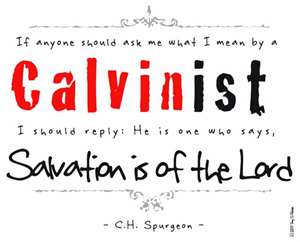
Reformed Trinitarian Calvinist
I strongly believe the Bible teaches that we (the sons of God) were predestined unto salvation and that salvation has NOTHING to do with “free will” but God’s sovereignty and grace and will give you scriptural evidence to support this view. I encourage you to pray before you continue reading that the Lord may open your eyes to His truth and that you approach this study with Bible in hand.
I will be guiding you through the proper exegesis needed in order to correctly interepret the verses we will be looking over.
Romans 9:22 ~What if God, although willing to demonstrate His wrath and to make His power known, endured with much patience vessels of wrath prepared for destruction? 23And He did so to make known the riches of His glory upon vessels of mercy, which He prepared beforehand for glory, 24even us, whom He also called, not from among Jews only, but also from among Gentiles.
The word prepared here is katartizo in the greek and means to complete, preparefor his (it’s) full destination or use. Now, when did God prepare the vessels both of destruction and the vessels of mercy? Verse 23 answers that question for us, beforehand. This word is proetoimasen in the greek which means to prepare beforehand or predestine (strongs definition 4282). So in this verse God states that He has “predestined” for glory those vessels of mercy. Now if God is sovereign enough to predestine us to glory, how can God predestine us to glory without predestining us to salvation? I ask you to think for a minute, how would God before the foundation of the world “predestine” us to glory without salvation? Are all men predestined for glory? You would agree that they are not. Only the elect is predestined for glory…let’s move on.
Ephisians 1:5 ~He predestined us to adoption as sons through Jesus Christ to Himself, according to the kind intention of His will…
In this passage we see that God predestined us to adoption. Our adoption as sons of God was settled before the foundation of the world. In order to be God’s son one must be born-again. How is one “predestined” unto adoption without being saved? If that were the case, that God bypassed predestination unto salvation and went right into adoption then that means that ALL MEN are sons of God and we know that is not true according to scripture. If you are a believer then you must agree on the fact that God has ALL knowledge and that He knew His adoptive sons when He predestined us to adoption, does it make any sense that God would say ” I predestine YOU to adoption as my son through Christ ” to the air…meaning whoever would like to be my son then hop on the train because it’s leaving. If that were the case then that would mean His predestination unto adoption is not predestination at all, it’s just an open invitation. When God predestines, He doesn’t predestine into the AIR, He clearly states WHO He predestined, US. Did He know who the US would be? Absolutely!
John 6:44 “No one can come to Me unless the Father who sent Me draws him; and I will raise him up on the last day.”
This passage of scripture is VERY clear. Who can come to Christ? All who wish? All who desire out of the goodness of their hearts which may I suggest an unregenerate person doesn’t have ANY?! NO, the work of God’s election and sovereignty is seen at work in this passage. NO ONE can come to Christ UNLESS the father HAS CHOSEN to draw him to Christ. God Almighty HAS to make the sovereign CHOICE to draw you (notice the work starts with God drawing you, the initiation starts with God) to Christ. Otherwise, you simply can not come! No where in scripture does it EVER teach us that we are in control of WHO God calls or doesn’t. That is God’s choice! Scripture teaches us that God chose Israel for no other reason than He wanted to. As christians we don’t have a problem with not knowing the reason behind the choosing of Israel but we believe it because the scripture says so. Why then, do we dare to question God and what He chooses according to His sovereignty? Because it is unfair that God created men that would end up in hell? What do you think you or any man deserve? Does scripture teach that God created “vessels” of wrath prepared for destruction? As we see in Rom 9:22. he indeed does!
Romans 8:29,30~ For those whom He foreknew, He also predestined to become conformed to the image of His Son, so that He would be the firstborn among many brethren;30 and these whom He predestined, He also called; and these whom He called, He also justified; and these whom He justified, He also glorified.”
OK, so you have predestined 2 times in these verses. The first predestined many armenians will argue this is a predestination to become conformed to the image of His son (again how in the world would you do that if you are not saved?). May I suggest that is this were so in it’s entirety, how does verse 30 tell us that these, who are these? those whom he predestined in the greek proorizo (meaning foreordain, predestine or mark out beforehand)…He also called…in the greek kaleo (meaning to summon, invite or name), He also justified in greek dikaioo (meaning to declare righteous). and these whom He “declared righteous or justified”, He also glorified in greek doxazo (meaning glorify or honor). In conclusion, God foreordained His choosen then he summoned or invite them through the hearing of the Gospel, these He declared righteous through Christ and He also glorified them. God forordained (predestined) then He called or summoned us, justified us through the blood of Christ and glorified us, ALL in that order!
*When the bible speaks of predestination it is clear through scripture that this takes place before creation!
Now, I know some of you are saying by now…What about free-will? Can I challenge you to think where did you get free-will from? Have you ever encountered free-will in the Bible concerning salvation? The phrase “free will” is found in the Bible 16 times. All 16 times it means “voluntary.” Fifteen of those times it’s used of a freewill (voluntary) offering. Not one of those 16 times does “free will” refer to salvation. Also, the idea that man has a “free will” independent from God’s rule, probably had its origin in heathen, Greek philosophy.
Can you define free-will?
“Free will” is the topic everyone assumes, but few define. If “free will” is defined as the “ability and desire to will to receive Christ”, then that contradicts the 13 verses in the right column above. But, if “free will” is defined as “voluntary will to make choices,” then humans have “free will.”
We have free will in the sense we freely (voluntarily) will whatever we have both the desire and ability to do. God influences us by circumstances, thoughts, and power so we become voluntarily willing to fulfill His will. Perhaps a better phrase than “free will” is “voluntary will.”
You may be surprised to discover that many Protestants share the Jesuit-Romanist view of free will. They think sinners have some inner desire and ability to “prepare and cooperate” with the Holy Spirit for salvation. They don’t understand that since the Fall, humans are spiritually dead, blind, and deaf, with no desire or ability to choose Christ. They don’t see the need for God to first give new birth, faith, and repentance, before sinners can “freely will” to choose Christ.
Many Protestants Believe the Jesuit- Roman Catholic View of Free Will. Are YOU one of them?
(The Roman Catholic Council of Trent, The Sixth Session: Justification)
Canon IV. If any one saith, that man’s free will moved and excited by God, by assenting to God exciting and calling, no-wise co-operates towards disposing and preparing itself for obtaining the grace of Justification; that it cannot refuse its consent, if it would, but that, as something inanimate, it does nothing whatever and is merely passive; let him be anathema.
Canon V. If any one saith, that, since Adam’s sin, the free will of man is lost and extinguished; or, that it is a thing with only a name, yea a name without a reality, a figment, in fine, introduced into the Church by Satan; let him be anathema.
Biblical TRUTH: God’s will RULES man’s will!
Actually, you probably already believe that God’s will rules man’s will, but you just didn’t know it…
Examples of How God’s Will Rules Man’s Will
A. Inspiration of Scripture
B. Infallibility of Bible prophecy
C. Eternal security
D. Heaven/new earth
A. Inspiration of Scripture: Do you believe in the inspiration and inerrancy of Scripture? If so, then you believe God ruled the wills of the Bible authors. They did not have “free will” to write errors in Scripture. Thankfully, the Lord kept their wills from error.
“All Scripture is God-breathed” (2 Tim. 3:16)
B. Infallibility of Bible Prophecy: Do you believe the Bible prophecies are infallible? If so, then you believe God ruled the wills of the prophets. They did not have “free will” to prophesy errors. God inspired the Old Testament prophets to prophesy accurately about the coming Messiah. During the inspiration process, He influenced and ruled their wills to keep them from error:
“no prophecy of the Scripture came into being of its own private interpretation. For prophecy was not borne at any time by the will of man, but holy men of God spoke being borne along by the Holy Spirit.” (2 Pet. 1:2-21)
That’s why the test of a true prophet vs. a false prophet is the infallibility of their predictions (Deut. 18:21-22.) If the prophets could have exercised their own wills, free from God’s control, then they never could have infallibly predicted Christ’s virgin birth, city of birth, suffering death, resurrection, second coming, etc.
C. Eternal Security: Do you believe in “eternal security?” If so, then you believe God rules believers’ wills. Most Christians agree they can’t fall away finally from Christ. Christians don’t have “free will” to become atheists or Satan worshippers. Thankfully, the Lord influences our wills to keep us believing and persevering in Him until the end.
“I will give you a new heart (will) and put a new spirit within you; I will take the heart of stone out of your flesh and give you a heart (will) of flesh. I will put My Spirit within you and cause you to walk in My statutes, and you will keep My judgments and do them.” (Ezek. 36:26-27)
“for it is God who works in you both to will and to do for His good pleasure.” (Phil. 2:13)
D. Heaven/New Earth: Finally, even if you don’t believe in eternal security in this life, still you probably believe Christians can never leave heaven or the new earth. If so, then you believe God rules His peoples’ wills. No one in heaven is free to leave and choose Hell. God will keep them willingly in heaven forever.
So, if you believe in biblical inerrancy, prophetic infallibility, or eternal security, then you already believe man doesn’t have a 100% “free will.” God’s will sovereignly rules our wills. And, I’m glad He does, aren’t you?
The issue is NOT do humans make choices!
All Christians believe humans make choices. The issue is how do we choose Christ – by internal, self ability and desire, or external, God-given ability and desire? And, if God gives His ability and desire to us, can we resist, or does He prevail?
Does satan have control over any given unregenerate person to do his will?
“So ought not this woman…whom Satan has bound…for 18 years, be loosed from this bond on the Sabbath?” (Lk. 13:16)
“the snare of the devil, having been taken captive by him to do his will.” (2 Tim. 2:26)
Your will was not free from sin’s control.
“His own iniquities entrap the wicked man, & he is caught in the cords of his sin.” (Pr. 5:22)
“whoever commits sin is a slave of sin” (Jn. 8:34)
“For I see that you are poisoned by bitterness and bound by iniquity.” (Acts 8:23)
“you were slaves of sin” (Rom. 6:17)
“For we ourselves were also once foolish, disobedient, deceived, slaving various lusts and pleasures” (Tit. 3:3)
“they themselves are slaves of corruption; for by whom a person is overcome, by him also he is brought into bondage.” (2 Pet. 2:19)
God sovereign & in control over humans’ wills including yours!
“you meant evil against me; but God meant it for good, in order to bring it about as it is this day, to save many people alive.” (Gen. 50:20)
“But I will harden his (Pharaoh’s) heart, so that he will not let the people go.” (Ex. 4:21)
“And the Lord had given the people favor in the sight of the Egyptians, so that they granted them what they requested. Thus they plundered the Egyptians.” (Ex. 12:36)
“And I indeed will harden the hearts of the Egyptians, and they shall follow them. So I will gain honor over Pharaoh and over all his army, his chariots, and his horsemen.” (Ex. 14:17)
“But Sihon king of Heshbon would not let us pass through, for the Lord your God hardened his spirit and made his heart obstinate, that He might deliver him into your hand” (Deut. 2:30)
“For it was of the Lord to harden their hearts, that they should come against Israel in battle, that He might utterly destroy them” (Josh. 11:20)
“God sent a spirit of ill will between Abimelech and the men of Shechem; and the men of Shechem dealt treacherously with Abimelech” (Jud. 9:23)
“the anger of the Lord was aroused against Israel, and He moved David against them to say, ‘Go, number Israel and Judah.'” (2 Sam. 24:1)
“The Lord has put a lying spirit in the mouth of all these prophets” (1 Kings 22:23)
“that the word of the Lord by the mouth of Jeremiah might be fulfilled, the Lord stirred up the spirit of Cyrus king of Persia, so that he made a proclamation throughout all his kingdom” (Ezra 1:1-3)
“the Lord made them joyful, and turned the heart of the king of Assyria toward them, to strengthen their hands in the work of the house of God” (Ezra 6:22)
“He turned their heart to hate His people, to deal craftily with His servants.” (Ps. 105:25)
“A man’s heart (will) plans his way, but the Lord directs his steps.” (Pr. 16:9)
“The king’s heart (will) is in the hand of the LORD…He turns it wherever He wishes. (Pr. 21:1)
“Woe to Assyria, the rod of My anger…I will send him against an ungodly nation, and against the people of My wrath I will give him charge…Yet he does not mean so, nor does his heart think so” (Is. 10:5-7)
“For the Lord of hosts has purposed, and who will annul it? His hand is stretched out, and who will turn it back?” (Is. 14:27)
“Who says of Cyrus, ‘He is My shepherd, and he shall perform all My pleasure'” (Is. 44:28)
“I will give them one heart and one way, that they may fear Me forever” (Jer. 32:39)
“I will put My fear in their hearts so that they will not depart from Me.” (Jer. 32:40)
“I will give you a new heart (will) and put a new spirit within you; I will take the heart of stone out of your flesh and give you a heart (will) of flesh. I will put My Spirit within you and cause you to walk in My statutes, and you will keep My judgments and do them.” (Ezek. 36:26-27)
“For His dominion is and everlasting dominion, and His kingdom is from generation to generation. All the inhabitants of the earth are reputed as nothing; He does according to His will in the army of heaven and among the inhabitants of the earth. No one can restrain His hand or say to Him, “What have you done?” (Dan. 4:34-35)
“For truly against Your holy Servant Jesus, whom You anointed, both Herod and Pontius Pilate, with the Gentiles and the people of Israel, were gathered together to do whatever Your hand and Your purpose determined before to be done.” (Acts 4:27-28)
“And we know that all things work together for good to those who love God, to those who are the called according to His purpose.” (Rom. 8:28)
“Why does He still find fault? For who has resisted His will?” (Rom. 9:19)
“But one and the same Spirit works all these things, distributing to each one individually as He wills.” (1 Cor. 12:11)
“for it is God who works in you both to will and to do for His good pleasure.” (Phil. 2:13)
“Instead you ought to say, ‘If the Lord wills, we shall live and do this or that.'” (Jas. 4:15)
“For God has put it into their hearts to fulfill His purpose, to be of one mind, and to give their kingdom to the beast, until the words of God are fulfilled.” (Rev. 17:17)
God Is in Control of ALL Things, and Sovereign Over ALL Things, do you believe it?
God couldn’t possibly make it any clearer that He controls our wills. What i’m saying is: God is in control (of ALL things, even salvation.) He is sovereign (over ALL things, even salvation.) Most Christians acknowledge He’s in control only in a general, vague sense. But, He tells us He’s in control of every minute detail of His universe, even your decisions, and the number of hairs on your head.
After Adam and Eve sinned, they hid from God not go to Him.
“Adam and his wife hid themselves from the presence of the Lord God” (Gen. 3:8)
God initiated contact with Adam, not Adam with God.
“Then the Lord God called to Adam and said to him, ‘Where are you?'” (Gen. 3:9)
As a sinner, you are spiritually DEAD! Not just sick!
“for in the day that you eat of it you shall surely die.” (Gen. 2:17)
“you…who were dead in trespasses and sins…even when you were dead in trespasses, made us alive together with Christ” (Eph. 2:1, 5)
“And you, being dead in your trespasses and the uncircumcision of your flesh, He has made alive” (Col. 2:13)
The spiritually dead can’t raise themselves. They must be raised by God.
7. Could you spiritually see the gospel, or were you spiritually blind?
“yet the Lord has not given you a heart to perceive & eyes to see & ears to hear” (Deut. 29:4)
“I speak to them in parables, because seeing they do not see, and hearing they do not hear, nor do they understand…For the hearts of this people have grown dull. Their ears are hard of hearing, and their eyes they have closed, lest they should see with their eyes and hear with their ears, lest they should understand with their hearts and turn, so that I should heal them.” (Mt. 13:13-15)
“Therefore they could not believe, because Isaiah said again: ‘He has blinded their eyes and hardened their hearts, lest they should see with their eyes, lest they should understand with their hearts and turn, so that I should heal them.'” (Jn. 12:38-40)
“to open their eyes, in order to turn them from darkness to light and from the power of Satan to God, that they may receive forgiveness of sins” (Acts 26:18)
“there is none who understands” (Rom. 3:11)
“But their minds were blinded.” (2 Cor. 3:14)
“But even if our gospel is veiled, it is veiled to those who are perishing, whose minds the god of this age has blinded, who do not believe, lest the light of the gospel of the glory of Christ, who is the image of God, should shine on them.” (2 Cor. 4:3-4)
The blind can’t see, until God first gives them sight.
You couldn’t hear the gospel, for you were spiritually deaf!
“yet the Lord has not given you a heart to perceive & eyes to see & ears to hear” (Deut. 29:4)
“I speak to them in parables, because seeing they do not see, and hearing they do not hear, nor do they understand…For the hearts of this people have grown dull. Their ears are hard of hearing, and their eyes they have closed, lest they should see with their eyes and hear with their ears, lest they should understand with their hearts and turn, so that I should heal them.” (Mt. 13:13-15)
You did not desire to seek God when you were spiritually dead, blind, & deaf.
“Then the Lord saw that the wickedness of man was great in the earth, and that every intent of the thoughts of his heart was only evil continually.” (Gen. 6:5)
“men loved darkness rather than light because their deeds were evil.” (Jn. 3:19)
“For everyone practicing evil hates the light and does not come to the light” (Jn. 3:20)
“haters of God” (Rom. 1:30)
“There is none who seeks after God.” (Rom. 3:11)
“I was found by those who did not seek Me; I was made manifest to those who did not ask for Me.” (Rom. 10:20)
Are unbelievers not sheep because they don’t believe, or do they not believe because they’re not sheep?
“But you do not believe, because you are not of My sheep.” (Jn. 10:26)
When you were spiritually dead, deaf & blind, were you born again by your will, or God’s will?
“who were born, not of blood, nor of the will of the flesh, nor of the will of man, but of God.” (Jn. 1:13)
“it is not of him who wills, nor of him who runs, but of God who shows mercy.” (Rom. 9:16)
“of His own will He brought us forth (birthed us) by the word of truth” (Jas. 1:18)
Then, the question arises, “If fallen, dead, deaf, blind sinners can’t come to Christ, then how do they come to Christ?” Does God give the new birth because they believed, or so that they can believe? In other words, is faith the cause of the new birth, or is the new birth the cause of faith? To believe that fallen, dead, deaf, blind sinners repented and believed to be born again is like getting the cart before the horse. Logically, they must have first been spiritually born again, before they could repent and believe in Christ.
Did God predestine your adoption & inheritance according to your will, or His will?
“He chose us in Him before the foundation of the world…having predestined us to adoption as sons by Jesus Christ to Himself, according to the good pleasure of His will” (Eph. 1:4-5)
“In Him also we have obtained an inheritance, being predestined according to the purpose of Him who works all things according to the counsel of His will” (Eph. 1:11)
Did God choose you because you would believe, or so that you would believe?
“God from the beginning chose you for salvation through sanctification by the Spirit and belief in the truth” (2 Thes. 2:13)
Whose choice made the ultimate difference, the apostles’ choice, or God’s choice?
“You did not choose Me, but I chose you and appointed you that you should go and bear fruit” (Jn. 15:16)
Whose will made Paul an apostle, his own will, or God’s will?
“Paul, called to be an apostle of Jesus Christ through the will of God” (1 Cor. 1:1)
Did God call you according to your purpose (will,) or His purpose?
“And we know that all things work together for good to those who love God, to those who are the called according to His purpose. For whom (not “what”) He foreknew, He also predestined to be conformed to the image of His Son” (Rom. 8:28-29)
“who has saved us and called us with a holy calling, not according to our works, but according to His own purpose and grace which was given to us in Christ Jesus before time began” (2 Tim. 1:9)
Who opened your heart, you or God?
“He opened their understanding, that they might comprehend the Scriptures.” (Lk. 24:45)
“The Lord opened her heart to heed the things spoken by Paul” (Acts 16:14)
How many of the lost does God call/draw, all or only some?
“Nor does anyone know the Father except the Son, and the one to whom the Son wills to reveal Him.” (Mt. 11:27)
“No one can come to me unless the Father who sent me draws him” (Jn. 6:44)
“Moreover whom He predestined, these he also called; whom He called, these He also justified; and whom He justified, these He also glorified.”(Rom. 8:30)
How many of those whom God calls/draws respond, some or all?
“And as many as had been appointed to eternal life believed.” (Acts 13:48)
“whom He called, these He also justified” (Rom. 8:30)
“concerning the election they are beloved for the sake of the fathers. For the gifts and the calling of God are irrevocable.” (Rom. 11:28-29)
Your repentance came from God, not of your own!
“Him God has exalted to His right hand to be Prince and Savior, to give repentance to Israel and forgiveness of sins.” (Acts 5: 31)
“God has also granted to the Gentiles repentance to life.” (Acts 11:18)
“those who are in opposition, if God perhaps willgrant them repentance so that they may know the truth” (2 Tim. 2:25-26)
The author of your faith is God.
“…those who had believed through grace” (Acts 18:27)
“For by grace you have been saved through faith, and that not of yourselves; it is the gift of God, not of works, lest anyone should boast” (Eph. 2:8)
“For to you it has been granted on behalf of Christ, not only to believe in Him, but also to suffer…” (Phil. 1:29)
“God from the beginning chose you for salvation through sanctification by the Spirit and belief in the truth” (2 Thes. 2:13)
“Every good gift and every perfect gift is from above, and comes down from the Father of lights” (Jas. 1:17)
“looking unto Jesus, the author and finisher of our faith…” (Heb. 12:2)
“to those who have obtained like precious faith with us through the righteousness of God” (2 Pet. 1:1)
Who made the difference in your decision for Christ, the pastor or God?
“I planted, Apollos watered, but God gave the increase. So then neither he who plants is anything, nor he who waters, but God who gives the increase.” (1 Cor. 3:6-7)
Who made the difference in your decision for Christ, you or God?
“that no flesh should glory in his presence. But of Him you are in Christ Jesus…that as is written, ‘He who glories, let him glory in the Lord.'” (1 Cor. 1:29-31)
“For who makes you differ? And what do you have that you did not receive? Now if you did indeed receive it, why do you boast as if you had not received it? (1 Cor. 4:7)
“But by the grace of God I am what I am” (1 Cor. 15:10)
“For by grace you have been saved through faith, and that not of yourselves; it is the gift of God, not of works, lest anyone should boast.” (Eph. 2:8-9)
If you made the difference in your decision for Christ, then you’d have reason to boast, wouldn’t you? Many credit God for 99% of salvation, and themselves for the other 1% (their decision.) God doesn’t deserve 99% of the glory, he deserves ALL of it!
God Gets ALL the Credit for Salvation.
Ever since Adam and Eve’s Fall, their offspring are spiritually dead, deaf, and blind. And, they freely, willingly, voluntarily choose sin instead of God. So, the Bible always makes man responsible for his sin. God is never responsible for man’s sin. But, since the fall, God (by His undeserved grace) initiates contact with some sinners, the ones whom He was predestined. He gives them new birth, new desire and ability to freely, willingly, and voluntarily choose Him. So, the Bible always gives God the credit for salvation. Humans are never credited with having achieved salvation. Your faith is not of your work, your belief on the gospel is NOT of your work and your salavtion is not of your work either. If God wouldn’t have allowed you to be spiritually alive to receive the gospel, you wouldn’t have. If God wouldn’t have chosen YOU and called YOU, you wouldn’t have been justified or glorified. No one can come to Christ unless they are choosen by God first!
Undeserved Grace and the Issue of “it’s unfair”
Praise Him that He’s chosen to save some because of His undeserved grace. He could have justly chosen to save none. That’s what He did for the fallen angels. They have no plan of salvation, no opportunity to hear the gospel and be saved. They don’t deserve it, and neither do we!He could have justly left Adam and Eve and all the rest of us to perish in hell. He didn’t have to design a plan of salvation. He doesn’t owe salvation to anyone. He freely chose to redeem a people for Himself, to the praise of His glorious mercy and grace. For those of you that say “well, that is just unfair”! Why would God choose some and not others…I do not know why. The Bible doesn’t tell us why, neither am I going to pretend I know God’s motives or reasons. The fact is that YOU and I deserve HELL for our sin and disobedience, yet He was gracious enough to save those who He chose. Those whom He did not choose, are paying the JUST penalty for sin. God did not choose ALL of Isarel either, he ONLY choose a remnant. Why? Again , I do not know. But who am I to question the ways of the Lord? I will never understand the full reasoning behind what and why God does what He does, but this I know…I have the Word of God to guide me into all truth and I am no one to question it.
Romans 9:27 Though the number of the Israelites be like the sand by the sea, only the remnant will be saved.
Our Triune God!
Our Triune God By John MacArthur
The Trinity is an unfathomable, and yet unmistakable doctrine in Scripture. As Jonathan Edwards noted, after studying the topic extensively, “I think [the doctrine of the Trinity] to be the highest and deepest of all Divine mysteries” (An Unpublished Treatise on the Trinity).Yet, though the fullness of the Trinity is far beyond human comprehension, it is unquestionably how God has revealed Himself in Scripture—as one God eternally existing in three Persons.
This is not to suggest, of course, that the Bible presents three different gods (cf. Deut. 6:4). Rather, God is three Persons in one essence; the Divine essence subsists wholly and indivisibly, simultaneously and eternally, in the three members of the one Godhead—the Father, Son, and Holy Spirit. (We considered the deity of Christ previously in this post.)
The Scriptures are clear that these three Persons together are one and only one God (Deut. 6:4). John 10:30 and 33 explain that the Father and the Son are one. First Corinthians 3:16 shows that the Father and the Spirit are one. Romans 8:9 makes clear that the Son and the Spirit are one. And John 14:16, 18, and 23 demonstrate that the Father, Son, and Spirit are one.
Yet, in exhibiting the unity between the members of the Trinity, the Word of God in no way denies the simultaneous existence and distinctiveness of each of the three Persons of the Godhead. In other words, the Bible makes it clear that God is one God (not three), but that the one God is a Trinity of Persons.
In the Old Testament, the Bible implies the idea of the Trinity in several ways. The title Elohim (”God”), for instance, is a plural noun which can suggest multiplicity (cf. Gen. 1:26). This corresponds to the fact that the plural pronoun (”us”) is sometimes used of God (Gen. 1:26; Isa. 6:8). More directly, there are places in which God’s name is applied to more than one Person in the same text (Ps. 110:1; cf. Gen. 19:24). And there are also passages where all three divine Persons are seen at work (Is. 48:16; 61:1).
The New Testament builds significantly on these truths, revealing them more explicitly. The baptismal formula of Matthew 28:19 designates all three Persons of the Trinity: “Go therefore and make disciples of all the nations, baptizing them in the name of the Father and the Son and the Holy Spirit.” In his apostolic benediction to the Corinthians, Paul underscored this same reality. He wrote, “The grace of the Lord Jesus Christ, and the love of God [the Father], and the fellowship of the Holy Spirit, be with you all” (2 Cor. 13:14). Other New Testament passages also spell out the glorious truth of the Triune God (Romans 15:16, 30; 2 Cor. 1:21–22; Eph. 2:18).
In describing the Trinity, the New Testament clearly distinguishes three Persons who are all simultaneously active. They are not merely modes or manifestations of the same person (as Oneness theology incorrectly asserts) who sometimes acts as Father, sometimes as Son, and sometimes as Spirit. At Christ’s baptism, all three Persons were simultaneously active (Matt. 3:16–17), with the Son being baptized, the Spirit descending, and the Father speaking from Heaven. Jesus Himself prayed to the Father (cf. Matt. 6:9), taught that His will was distinct from His Father’s (Matt. 26:39), promised that He would ask the Father to send the Spirit (John 14:6), and asked the Father to glorify Him (John 17:5). These actions would not make sense unless the Father and the Son were two distinct Persons. Elsewhere in the New Testament, the Holy Spirit intercedes before the Father on behalf of believers (Rom. 8:26), as does the Son, who is our Advocate (1 John 2:1). Again, the distinctness of each Person is in view.
The Bible is clear. There is only one God, yet He exists, and always has existed, as a Trinity of Persons—the Father, the Son, and the Spirit (cf. John 1:1, 2). To deny or misunderstand the Trinity is to deny or misunderstand the very nature of God Himself.
* Today’s article was adapted from John’s commentary on 1-3 John.
Can You Be a Christian and Deny the Trinity?
By: John MacArthur
Question:
A Mormon asked me this question a number of years ago, and through the years here at church, I’ve asked a number of people this question, and I wanted to get your opinion. Can you become a Christian if you deny the Trinity?
Answer:
I would answer, “No.” If you don’t believe in the Trinity, then you don’t understand who God is. You may say the word “God” but you don’t understand His nature. Second, you couldn’t possibly understand who Christ is–that He is God in human flesh. The Incarnation of Christis an essential component of the biblical gospel, as John 1:1-14 and many other biblical passages make clear. To deny the Trinity is to deny the Incarnation. And to deny the Incarnation is to wrongly understand the truegospel.
In saying that, I realize that such an answer is going to not only impact people that you may have witnessed to (like Mormons), butit also applies tosome in the broader Pentecostal movement, called United Pentecostals or “Jesus-Only” Pentecostals.Such individualshold to a kind of modalism, where God is sometimes in the mode of the Father orthe mode of the Son or the mode of the Spirit, but He’s never all three at the same time. That too is a deficient and heretical view of the Trinity. It denies the distinct Personhood of the Father, the Son, and the Holy Spirit.
The same question sometimes arises about the Virgin Birth. I think it is possible for a personto become a Christian before learning about the details of theVirgin Birth, thoughthat personwould certainly assume that Jesus Christ must have had a unique birthsince He is both God and man. But, if someone knows about the Virgin Birth and says, “Ideny the Virgin Birth,” then he is simultaneously denying the deity of Christ, and also the Trinity. Such a person betrays the fact that they do not understand the gospel, and therefore cannot have truly been saved.
The Trinity VS Oneness theology.Question: “What does the Bible teach about the Trinity?”
Answer: The most difficult thing about the Christian concept of the Trinity is that there is no way to perfectly and completely understand it. The Trinity is a concept that is impossible for any human being to fully understand, let alone explain. God is infinitely greater than we are; therefore, we should not expect to be able to fully understand Him. The Bible teaches that the Father is God, that Jesus is God, and that the Holy Spirit is God. The Bible also teaches that there is only one God. Though we can understand some facts about the relationship of the different Persons of the Trinity to one another, ultimately, it is incomprehensible to the human mind. However, this does not mean the Trinity is not true or that it is not based on the teachings of the Bible.
The Trinity is one God existing in three Persons. Understand that this is not in any way suggesting three Gods. Keep in mind when studying this subject that the word “Trinity” is not found in Scripture. This is a term that is used to attempt to describe the triune God—three coexistent, co-eternal Persons who make up God. Of real importance is that the concept represented by the word “Trinity” does exist in Scripture. The following is what God’s Word says about the Trinity:
1) There is one God (Deuteronomy 6:4; 1 Corinthians 8:4; Galatians 3:20; 1 Timothy 2:5).
2) The Trinity consists of three Persons (Genesis 1:1, 26; 3:22; 11:7; Isaiah 6:8, 48:16, 61:1; Matthew 3:16-17, 28:19; 2 Corinthians 13:14). In Genesis 1:1, the Hebrew plural noun “Elohim” is used. In Genesis 1:26, 3:22, 11:7 and Isaiah 6:8, the plural pronoun for “us” is used. The word “Elohim” and the pronoun “us” are plural forms, definitely referring in the Hebrew language to more than two. While this is not an explicit argument for the Trinity, it does denote the aspect of plurality in God. The Hebrew word for “God,” “Elohim,” definitely allows for the Trinity.
In Isaiah 48:16 and 61:1, the Son is speaking while making reference to the Father and the Holy Spirit. Compare Isaiah 61:1 to Luke 4:14-19 to see that it is the Son speaking. Matthew 3:16-17 describes the event of Jesus’ baptism. Seen in this passage is God the Holy Spirit descending on God the Son while God the Father proclaims His pleasure in the Son. Matthew 28:19 and 2 Corinthians 13:14 are examples of three distinct Persons in the Trinity.
3) The members of the Trinity are distinguished one from another in various passages. In the Old Testament, “LORD” is distinguished from “Lord” (Genesis 19:24; Hosea 1:4). The LORD has a Son (Psalm 2:7, 12; Proverbs 30:2-4). The Spirit is distinguished from the “LORD” (Numbers 27:18) and from “God” (Psalm 51:10-12). God the Son is distinguished from God the Father (Psalm 45:6-7; Hebrews 1:8-9). In the New Testament, Jesus speaks to the Father about sending a Helper, the Holy Spirit (John 14:16-17). This shows that Jesus did not consider Himself to be the Father or the Holy Spirit. Consider also all the other times in the Gospels where Jesus speaks to the Father. Was He speaking to Himself? No. He spoke to another Person in the Trinity—the Father.
4) Each member of the Trinity is God. The Father is God (John 6:27; Romans 1:7; 1 Peter 1:2). The Son is God (John 1:1, 14; Romans 9:5; Colossians 2:9; Hebrews 1:8; 1 John 5:20). The Holy Spirit is God (Acts 5:3-4; 1 Corinthians 3:16).
5) There is subordination within the Trinity. Scripture shows that the Holy Spirit is subordinate to the Father and the Son, and the Son is subordinate to the Father. This is an internal relationship and does not deny the deity of any Person of the Trinity. This is simply an area which our finite minds cannot understand concerning the infinite God. Concerning the Son see Luke 22:42, John 5:36, John 20:21, and 1 John 4:14. Concerning the Holy Spirit see John 14:16, 14:26, 15:26, 16:7, and especially John 16:13-14.
6) The individual members of the Trinity have different tasks. The Father is the ultimate source or cause of the universe (1 Corinthians 8:6; Revelation 4:11); divine revelation (Revelation 1:1); salvation (John 3:16-17); and Jesus’ human works (John 5:17; 14:10). The Father initiates all of these things.
The Son is the agent through whom the Father does the following works: the creation and maintenance of the universe (1 Corinthians 8:6; John 1:3; Colossians 1:16-17); divine revelation (John 1:1, 16:12-15; Matthew 11:27; Revelation 1:1); and salvation (2 Corinthians 5:19; Matthew 1:21; John 4:42). The Father does all these things through the Son, who functions as His agent.
The Holy Spirit is the means by whom the Father does the following works: creation and maintenance of the universe (Genesis 1:2; Job 26:13; Psalm 104:30); divine revelation (John 16:12-15; Ephesians 3:5; 2 Peter 1:21); salvation (John 3:6; Titus 3:5; 1 Peter 1:2); and Jesus’ works (Isaiah 61:1; Acts 10:38). Thus, the Father does all these things by the power of the Holy Spirit.
There have been many attempts to develop illustrations of the Trinity. However, none of the popular illustrations are completely accurate. The egg (or apple) fails in that the shell, white, and yolk are parts of the egg, not the egg in themselves, just as the skin, flesh, and seeds of the apple are parts of it, not the apple itself. The Father, Son, and Holy Spirit are not parts of God; each of them is God. The water illustration is somewhat better, but it still fails to adequately describe the Trinity. Liquid, vapor, and ice are forms of water. The Father, Son, and Holy Spirit are not forms of God, each of them is God. So, while these illustrations may give us a picture of the Trinity, the picture is not entirely accurate. An infinite God cannot be fully described by a finite illustration.
The doctrine of the Trinity has been a divisive issue throughout the entire history of the Christian church. While the core aspects of the Trinity are clearly presented in God’s Word, some of the side issues are not as explicitly clear. The Father is God, the Son is God, and the Holy Spirit is God—but there is only one God. That is the biblical doctrine of the Trinity. Beyond that, the issues are, to a certain extent, debatable and non-essential. Rather than attempting to fully define the Trinity with our finite human minds, we would be better served by focusing on the fact of God’s greatness and His infinitely higher nature. “Oh, the depth of the riches of the wisdom and knowledge of God! How unsearchable his judgments, and his paths beyond tracing out! Who has known the mind of the Lord? Or who has been his counselor?” (Romans 11:33-34).
Jehovah Witnesses preach the Oneness of God!
Part 1
Part 2Jonathan Edwards on the Trinity.http://www.piney.com/HsJonEdw.html
Charles Spurgeon on the Trinity.
http://www.spurgeon.org/~phil/creeds/bcof.htm
John Calvin on the Trinity.
http://thriceholy.net/Texts/Calvin.html
History of the Oneness theology!
http://davidlambministries.com/index.php?option=com_content&view=article&id=12&Itemid=20
The troubling verses against the eternal security of salvation!?

There are several scriptures in the Bible that seem to undermine the promises in Ephesians, John and Hebrews regarding our secure salvation. One of them can be found in the book of Galatians where Paul tells them that they had fallen from grace. Another can be found in Hebrews where it speaks about those who were once enlightened who can’t be renewed to repentance. There’s also John 15 in which Jesus tells us that those who don’t abide in Him are thrown away as dead branches. I find that the most frighting statement of all is found in Matthew 12. The unpardonable sin! We’re going to go through all these passages and conduct the proper hermeneutics in order to find out in what context were these passages written and how it pertains to the security of our salvation.
Galatians 5:1-5
1It is for freedom that Christ has set us free. Stand firm, then, and do not let yourselves be burdened again by a yoke of slavery 2Mark my words! I, Paul, tell you that if you let yourselves be circumcised, Christ will be of no value to you at all. 3Again I declare to every man who lets himself be circumcised that he is obligated to obey the whole law. 4You who are trying to be justified by law have been alienated from Christ; you have fallen away from grace. 5But by faith we eagerly await through the Spirit the righteousness for which we hope.”
Paul is writing to the people in the Galatian church who had made a profession of faith in Christ Jesus as Lord and Savior. If this were not so they would not have been part of the church in Galatia. Many of these people had a jewish background and had a legalistic view of pleasing God by their self effort and merit. These people who had first responded positively to the gospel of justification by faith alone in Christ alone had a real problem setting aside their legalistic background. They were known as the Judaizers. They claimed that faith in Jesus Christ was important yet not sufficient for complete salvation. They also taught that what Moses began in the old covenant and Christ added in the new covenant had to be finished and perfected by one’s own efforts (having circumcision at the center as a symbol of spiritual merit). Paul responded to this heresy by pointing out 4 of it’s tragic consequences. In Galatians 5 Paul declares that regardless of someone’s association with the church, if he by either life or words rejected the sufficiency of faith in Christ, he forfeits Christ work on his behalf, places himself under obligation to keep the whole Mosaic Law, falls from God’s grace, and excludes himself from God’s righteousness. The Judaizers seemed to acknowledge the concept of salvation by grace through faith, but then fell away from it by emphasizing the Mosaic law as a means to salvation. That’s what it means to have fallen from grace. To attempt to be justified by law is to reject the concept grace. In Galatians 5:4, Paul was not referring to the security of the believer but to the contrasting way of grace and law, faith and works, as means of salvation. He was NOT teaching that a person who has once been justified (saved) can lose his righteous standing before God and become lost again by being legalistic. The Bible teaches and knows nothing about becoming unjustified! Applied to one who is really an unbeliever, the principle of falling from grace speaks of being exposed to the gracious truth of the gospel and then turning one’s back on Christ. Such a person is an apostate!
During the early church’s time, many unbeliever’s (both Jews and Gentiles) – not only heard the gospel but also witnessed the miraculous confirming sings performed by the apostles. They often could not help becoming attracted to Christ and making some profession of faith in Him. Many of these people became involved in the local church and vicariously experienced the blessings of Christian love and fellowship. They were exposed firsthand to every truth and blessing of the gospel of grace, but then turned away. According to the passage we will soon examine, they had “been enlightened”, had “tasted of the heavenly gift,” and had even “been made partakers of the Holy Spirit” by witnessing his divine ministry in the lives of believers (Heb 6:4). The problem is that they refused to trust in Christ alone, so they fell away, losing all prospect of repentance and therefore salvation, since “there is salvation in no one else; for there is no other name under heaven…by which we must be saved” (Acts 4:12). They came to the very doorway of grace and then fell away, back into their works oriented religion.
Hebrews 6
It is possible for people to go to church for years, hear the gospel over and over again, and even be faithful church members, but never commit their lives to Jesus Christ. We meet such people in Hebrews 6. The writer was specifically talking to Jewish people similar to the legalistic Galatians, but the warning applies to everyone. It is encouraging to know what God can do with a repentant heart. But it should make the hairs on your neck stand up knowing what he will do with unrepentant sinners. In particular, those who know the truth of God’s saving grace in Jesus Christ – who perhaps have seen it change the lives of many of their friends and family members, who may even have made some profession of faith in Him – yet who turn around and walk away from full acceptance., are given the severest possible warning. Persistent rejection of Christ will result in such persons passing the point of no return spiritually, of losing forever the opportunity of salvation. That is what happens to an individual who is indecisive. He usually follows his evil heart of unbelief and turns his back forever on the living God. Unlike a knife, truth becomes sharper with use, which for truth comes by acceptance and obedience. A truth that is heard but not accepted and followed becomes dull and meaningless. The more we neglect it, the more immune to it we become. By not accepting the gospel when it was still “news” those addressed in the book of hebrews had begun to grow indifferent to it and had become spiritually sluggish, neglectful, and hard. Because of the disuse of their knowledge of the gospel, they now could not bring themselves to make the right decision about it. They were, in fact, in danger of making a desperately wrong decision, of turning around because of pressure and persecution, and completely going back to Judaism. The individuals addressed here had five great advantages because of their association with the church: They had been enlightened, had tasted Christ’s heavenly gift, had partaken of the Holy Spirit, had tasted the Word of God, and had tasted the miraculous powers of the age to come (see Heb6:4-5). There is no reference at all to salvation. In fact, no term used here is ever used elsewhere in the new testament for salvation, and none should be taken to refer to it in this passage. The enlightenment spoken of here has to do with intellectual perception of spiritual truth. It means to be mentally aware of something, to be instructed or informed. It carried no connotation of response – of acceptance or rejection, belief of disbelief. The tasting or partaking implies something similar: a mere sampling of truth. It was not embraced or lives, only examined. These individuals had been wondrously blessed by God’s enlightenment, by association with His Spirit, and by sampling His heavenly gifts, His Word, and His power. Still they DID NOT believe! Hence comes the fearful warning taht those who have experienced all that, “and then have fallen away, it is impossible to renew them again to repentace, since they again crucify to themselves the Son of God and put Him to open shame” (v6).
Because they believe the warning is addressed to christians, some interpreters think Hebrews 6 teaches that salvation can be lost. If that interpretation were true, however the passage would also teach that, one lost, salvation could never be regained – that the person would be damned forever. There would be no gong back and forth, in and out of grace, as most people who believe you can lose your salvation seem to assume. But Christians are not being addressed, and it is the opportunity for receiving salvation, not salvation itself, that can be lost.
It is unbelievers who are in danger of losing salvation – in the sense of losing the opportunity ever to receive it. Once they see and hear the truth of the gospel, they have only two choices: either going on to full knowledge of God through faith in Christ or turning away from Him and becoming lost forever. The frighting finality of that danger must not be minimized. People who are exposed to the gospel can get just enough to immunize them against the real thing. The longer they continue to resist it, whether graciously or violently, they more they become immune to it. Their spiritual system becomes becomes more and more unresponsive and insensitive. Their only hope is to reject whatever they are holding onto and receive Christ without delay – lest they become so hard, often without knowing it, and their opportunity is forever lost. When people reject Christ at the peak experience of knowledge and conviction, they will not accept Him at a lesser level. So salvation becomes impossible.
John 15 and Matthew 12 are still to come in the next blog post!
This has been from my beloved teacher John MacArthur.
Can you lose your salvation?
Undeserved Assurance

Now some people have assurance who have no right to it. An old spiritual put it simply and directly: “Everybody talkin’ about heaven ain’t going there.” Some feel all is well between them and God when it isn’t. They don;t understand the truth about salvation and their own spiritual condition. Many people ask me why I speak and write so frequently on salvation and spiritual self-examination. Often they fear that what I’ve said will undermine the assurance of true Christians. Of course, I have no desire to do that, but to maintain a balanced perspective on the issue, I recall that Jesus said, Matt 7:21“Not everyone who says to Me, ‘Lord, Lord,’ will enter the kingdom of heaven, but he who does the will of My Father who is in heaven will enter. 22“Many will say to Me on that day, ‘Lord, Lord, did we not prophesy in Your name, and in Your name cast out demons, and in Your name perform many miracles?’ 23“And then I will declare to them, ‘I never knew you; DEPART FROM ME, YOU WHO PRACTICE LAWLESSNESS.’ That passage haunts me. Like no other, it brings me face to face with the reality that many people are deceived about their salvation. I am sure the apostle Paul felt that way when he said to the church at large, Test yourselves to see if you are in the faith; examine yourselves!” (2 Cor 13:5)
How do people acquire a false sense of assurance? By receiving false information about salvation. Much of our modern day evangelism contributes to that through what I call “syllogistic assurance.”
A syllogism has a major premise and a minor premise that lead to a conclusion. Let’s consider John 1:12: “But as many as received Him, to them He gave the right to become children of God, even to those who believe in His name.” The major premise: Anyone who receives Jesus becomes God’s child. The minor premise: the person you just witnessed to received Christ. Conclusion: The person must now be a child of God. That seems logical, but the problem is, you don’t know whether the minor premise is true – whether that person truly received Christ. Beware of trying to assure people of their salvation based on an untested profession. True assurance is the reward of tested and proven faith (see James 1:2-4; 1 Peter 1:6-9). And it’s the Holy Spirit who gives real assurance (see Romans 8:16). The human counselor must guard against any tendency to usurp that role.
Undermined Assurance
Some people believe no one can have full assurance- not even a true Christian. They reject God’s sovereignty in salvation, thereby destroying the theological basis for eternal security and assurance. That’s the historical Armenian view (named after Dutch theologian). It asserts that if a Christian thinks he is secure forever, he is apt to become spiritually negligent. That belief is also the official teaching of the Roman Catholic Church. The Council of Trent declared it anathema to say ” that a man who is born again and justified is bound [of faith] to believe that is certainly in the number of predestined” (canon 15 on justification). Modern Catholic teaching, such as that of Vatican II, upholds that position. G.C Berkhouwer’s the conflict with Rome explains that Rome’s denial of assurance of salvation is consistent with it’s conception of the nature of salvation. Since it conceives of salvation as a joint effort by man and God, something that’s maintained through the doing of good works, it concludes the believer can never be absolutely sure of his salvation. Why? Because if my salvation depends on God and me, I might mess up.
Whenever you have a theology that involves human effort for salvation, there can be no true security or assurance, because human beings can default. But historical biblical theology declares salvation is entirely the work of God, which leads to the concomitant doctrines of security and assurance.
The apostle John said, “These things I have written to you who believe in the name of the son of God, so that you may know that you have eternal life” (1 John 5:13). The prophet Isaiah wrote, “The work of righteousness will be peace, and the service of righteousness, quietness and confidence forever (Isaiah 32:17). Where God grants righteousness, He also adds the peace of assurance.
Full Assurance
It is true that someone can be saved and doubt it. One may go to heaven in a mist, not knowing for sure he’s going, but that’s certainly not the way to enjoy the trip. God wants you to enjoy the trip. First, consider what the bible teaches about the lasting nature of salvation. There’s no valid basis for being assured of your salvation is Scripture says it’s possible for you to lose it. We will examine the classic biblical texts affirming the forever quality of salvation, but will not ignore the troubling passages that seem to indicate otherwise. Then we will explore two passages that seem to indicate otherwise. Then we will explore two passages that overwhelmingly illustrate in cumulative fashion the security of salvation as a gift of God in line with His irrevocable purposes. All this constitutes the objective grounds for assurance. We’re to be assured of our salvation first and foremost because scripture promises eternal life to those who believe in Christ (see John 20:31). God’s Word and the guarantee of life to believers is thus the foundation of full assurance.
Second, once we’ve established that the Bible consistently affirms that salvation is forever, we need to get personal. As Paul said, we need to test ourselves. The lasting nature of salvation won’t mean anything to you personally unless you are a genuine believer. How can you tell whether you are really a christian? How do you know if your faith is real? The apostle John write his first letter to answer that question, for it is the same question. He gave us a series of tests to measure ourselves by, and we will take them all. They delve into the subjective grounds for assurance. Their focus is the fruit of righteousness in the believer’s life and the internal witness of the Holy Spirit. Note that those two subjective factors have meaning only if they are first rooted by faith in the objective truth of God’s Word. They are vital to our discussion, however, and I will emphasize them in the remainder of the book because most contemporary discussions on assurance focus almost exclusively int he objective grounds for assurance. They minimize or dismiss the subjective grounds, thus robbing an untold number of believers of a valuable source of assurance. Worse yet, in doing so they perpetuate the tragic phenomenon of false assurance.
Third, as we take a closer look at the subjective grounds for assurance, we will see what God’s word says to the many believers who struggle emotionally with the issue of assurance – in spite of knowing the promises of scripture. Perhaps you’re on of them: You believe in the security of salvation and that your faith in Christ is genuine, but you are plagued with the insecure feeling of not knowing for sure whether you will go to heaven. For some of you, those times are but fleeting moments; for others they last a long time; and for still others, they seem like a way of life. Is there any way to overcome that doubt? How can you match up your feelings with your faith? How can you experience the assurance for your salvation?
For a start, it helps to know the different reasons that could lead you to doubt your salvation. That’s how I began my series on assurance from 2 Peter 1. It’s an honest examination of where most of us are struggling. We don’t want to assume because we know the facts, we therefore experience the reality. That assurance will become more and more real as we understand and apply the virtues Peter described. After we examine them in detail, we will conclude out study by taking an encouraging look at victory in the spirit and the promise of God to help us persevere.
To provide hooks to hang your thoughts on, I’ve come up with three simple questions to remind you of the direction of our study:
* Is is a done deal? – what the Bible teaches about the lasting nature of salvation.
* Is it real? – how can you tell whether you are truly a christian?
* Is it something I can feel? – how you can experience the assurance of secure salvation.
My prayer is that after carefully considering each area, grace and peace will be yours in fullest measure (see 1 Peter 1:2). Don’t continue to live with doubts about your eternal salvation. Rather, live with blessed assurance God wants you to enjoy as His child!
Part of the intro to John MacArthur’s book Saved without a Doubt.
The Doctrine of Election, John 3:16 and Calvinism.
What Is the Doctrine of Election?
by: John MacArthur
 The idea that God does what He wants, and that what He does is true and right because He does it, is foundational to the understanding of everything in Scripture, including the doctrine of election.
In the broad sense, election refers to the fact that God chooses (or elects) to do everything that He does in whatever way He best sees fit. When He acts, He does so only because He willfully and independently chooses to act. According to His own nature, predetermined plan, and good pleasure, He decides to do whatever He desires, without pressure or constraint from any outside influence.
The Bible makes this point repeatedly. In the very act of creation, God created precisely what He wanted to create in the way He wanted to create it (cf. Gen. 1:31). And ever since the creation, He has sovereignly prescribed or permitted everything in human history, in order that He might accomplish the redemptive plan which He had previously designed (cf. Is. 25:1; 46:10; 55:11; Rom. 9:17; Eph. 3:8–11).
In the Old Testament, He chose a nation for Himself. Out of all the nations in the world, He selected Israel (Deut 7:6; 14:2; Psalm 105:43; 135:4). He chose them, not because they were better or more desirable than any other people, but simply because He decided to choose them. In the words of Richard Wolf, “How odd of God to choose the Jews.” It may not have rhymed as well, but the same would have been true of any other people God might have selected. God chooses whomever He chooses, for reasons that are wholly His.
The nation of Israel was not the only recipient in Scripture of God’s electing choice. In the New Testament, Jesus Christ is called Christ, “My Chosen One” (Luke 9:35). The holy angels also are “chosen angels” (1 Tim. 5:21). And New Testament believers are those who were “chosen of God” (Col. 3:12; cf. 1 Cor. 1:27; 2 Thess. 2:13; 2 Tim. 2:10; Titus 1:1; 1 Pet. 1:1; 2:9; 5:13; Rev. 17:14), meaning that the church is a community of those who were chosen, or “elect” (Eph. 1:4).
When Jesus told His disciples, “You did not choose Me but I chose you” (John 15:16), He was underscoring this very truth. And the New Testament reiterates it in passage after passage. Acts 13:48 describes salvation in these words, “As many as have been appointed to eternal life believed.” Ephesians 1:4–6 notes that, God “chose us in Him [Christ] before the foundation of the world, that we would be holy and blameless before Him. In love He predestined us to adoption as sons through Jesus Christ to Himself, according to the kind intention of His will, to the praise of the glory of His grace, which He freely bestowed on us in the Beloved.” In his letters to the Thessalonians, Paul reminds his readers that he knew God’s choice of them (1 Thess. 1:4), and that he was thankful for them “because God has chosen you from the beginning for salvation” (2 Thess. 2:13). The Word of God is clear: believers are those whom God chose for salvation from before the beginning.
Even the foreknowledge to which Peter refers should not be confused with simple foresight as some would teach—contending that God, in eternity past, looked down the halls of history to see who would respond to His call and then elected the redeemed on the basis of their response. Such an explanation makes God’s decision subject to man’s decision, and gives man a level of sovereignty that belongs only to God. It makes God the One who is passively chosen, rather than the One who actively chooses. And it also misunderstands the way in which Peter uses the term “foreknowledge.” In 1 Peter 1:20 the apostle uses the verb form of that very word, prognosis in the Greek, to refer to Christ. In that case, the concept of “foreknowledge” certainly includes the idea of a deliberate choice. It is reasonable, then, to conclude that the same is true when Peter applies prognosis to believers in other places (cf. 1 Pet. 1:2).
The ninth chapter of Romans also reiterates the elective purposes of God. There, in reference to His saving love for Jacob (and Jacob’s descendants) as opposed to Esau (and Esau’s lineage), God’s electing prerogative is clearly displayed. God chose Jacob over Esau, not on the basis of anything Jacob or Esau had done, but according to His own free and uninfluenced sovereign purpose. To those who might protest, “That is unfair!” Paul simply responds by asking, “Who are you, O man, who answers back to God?” (v. 20).
Many more Scriptures could be added to this survey. Yet as straightforward as the Word of God is, people continually have difficulty accepting the doctrine of election. The reason, again, is that they allow their preconceived notions of how God should act (based on a human definition of fairness) to override the truth of His sovereignty as laid out in the Scriptures.
Frankly, the only reason to believe in election is because it is found explicitly in God’s Word. No man and no committee of men originated this doctrine. It is like the doctrine of eternal punishment, in that it conflicts with the dictates of the carnal mind. It is repugnant to the sentiments of the unregenerate heart. And like the doctrine of the Holy Trinity and the miraculous birth of our Savior, the truth of election, because it has been revealed by God, must be embraced with simple and unquestioning faith. If you have a Bible and you believe it, you have no other option but to accept what it teaches.
The Word of God presents God as the controller and disposer of all creatures (Dan. 4:35; Is. 45:7; Lam. 3:38), the Most High (Psalm 47:2; 83:18), the ruler of heaven and earth (Gen. 14:19; Is. 37:16), the One against whom none can stand (2 Chron. 20:6; Job 41:10; Is. 43:13). He is the Almighty who works all things after the counsel of His will (Eph. 1:11; cf. Is. 14:27; Rev. 19:6), and the heavenly Potter who shapes men according to His own good pleasure (Rom. 9:18–22). In short, He is the decider and determiner of every man’s destiny, and the controller of every detail in each individual’s life (Prov. 16:9; 19:21; 21:1; cf. Ex. 3:21–22; 14:8; Ezra 1:1; Dan. 1:9; Jas. 4:15)—which is really just another way of saying, “He is God.”
Is the Doctrine of Election Biblical?
by: John MacArthur
Among the most hotly contested and persistent debates in the history of the confessing church, the doctrine of election is perhaps the greatest of all. The question goes like this: Does God choose sinners to be saved and then provide for their salvation? Or, Does God provide the way of salvation that sinners must choose for themselves?
Where’s the evidence?
This question of choice is called “election” because of the Greek word for those who are chosen—the Bible calls them eklektos. There are many such uses in the Bible (cf. Col. 3:12; 1 Tim. 5:21; Tit. 1:1; 2 John 1), but one of my favorites is in Romans 8:33: “Who will bring a charge against God’s elect?” The answer is, “no one,” but why? Is it because I chose God, or is it because God chose me?
One passage that is critical to the discussion is in the opening chapter of Paul’s letter to the Ephesians. Immediately after his customary greeting, Paul launches in Ephesians 1:3-14 with a great song of praise. It’s only one sentence—but, with 200 words in the Greek, it may be the longest single sentence in religious literature.
Paul touches on all the great biblical themes in that hyper-complex sentence—sanctification, adoption, redemption, and glorification—and all of them rest on one foundational doctrine, the doctrine of election. The most superlative spiritual blessings stand on Ephesians 1:4—“He chose us [elected us] in Him before the foundation of the world.”
So the doctrine of election is biblical, but what does that passage really teach? I want to help you get a better grasp of that by pointing out what Paul teaches about election. If you are a believer, you can equip yourself for your next conversation on this topic. But more important, as one of His elect you can rejoice in the astonishing kindness God showed you before the world began.
What does it mean?
Paul’s song is essentially his reflection on the amazing truth that God “blessed us with every spiritual blessing … in Christ” (v. 3). And how did He bless us? “He chose us in Him before the foundation of the world” (Eph. 1:4).
God didn’t draw straws; He didn’t look down the corridor of time to see who would choose Him before He decided. Rather, by His sovereign will He chose who would be in the Body of Christ. The construction of the Greek verb for “chose” indicates God chose us for Himself. That means God acted totally independent of any outside influence. He made His choice totally apart from human will and purely on the basis of His sovereignty.
Jesus said to His disciples, “You did not choose Me, but I chose you” (John 15:16). And in the same Gospel, John wrote, “But as many as received Him, to them He gave the right to become children of God, even to those who believe in His name, who were born, not of blood nor of the will of the flesh nor of the will of man, but of God” (1:12-13, italics mine). And Paul said, “But we should always give thanks to God for you, brethren beloved by the Lord, because God has chosen you from the beginning for salvation through sanctification by the Spirit and faith in the truth” (2 Thess. 2:13).
Those statements defining God’s sovereign choice of believers are not in the Bible to cause controversy, as if God’s election means sinners don’t make decisions. Election does not exclude human responsibility or the necessity of each person to respond to the gospel by faith. Jesus said, “All that the Father gives Me will come to Me, and the one who comes to Me I will certainly not cast out” (John 6:37).
Admittedly the two concepts don’t seem to go together. However, both are true separately, and we must accept them both by faith. You may not understand it, but rest assured—it’s fully reconciled in the mind of God.
You must understand that your faith and salvation rest entirely on God’s election (cf. Acts 13:48). And yet the day you came to Jesus Christ, you did so because of an internal desire—you did nothing against your will. But even that desire is God-given—He supplies the necessary faith so we can believe (Eph. 2:8).
Think about it—if your salvation depends on you, then praise to God is ridiculous. But, in truth, your praise to God is completely appropriate, because in forming the Body before the world began, He chose you by His sovereign decree apart from any of your works. The doctrine of election demonstrates God being God, exercising divine prerogatives. For that we must praise Him.
“But that’s not fair!”
Some are shocked to find that God didn’t choose everyone to salvation. Jesus said, “And this is the will of Him who sent Me, that of all that He has given Me I lose nothing, but raise it up on the last day” (John 6:39, italics mine). God the Father chose certain individuals to form a Body as a gift to Jesus Christ. Every believer is part of that love gift to Christ—a gift of the Father’s love to His Son.
To those who say that is unjust, Paul answers: “What shall we say then? There is no injustice with God, is there? May it never be! For He says to Moses, ‘I will have mercy on whom I have mercy, and I will have compassion on whom I have compassion’” (Rom. 9:14-15).
So why does God still find fault in unrepentant sinners when He didn’t choose them? Doesn’t this deny human responsibility? Is it fair for God to still hold them accountable?
Paul answers all such questions with a rebuke—“who are you, O man, who answers back to God? The thing molded will not say to the molder, ‘Why did you make me like this,’ will it?” (v. 20). Does the clay jump up and ask the potter why it looks the way it does? Not at all.
Some believe that is terribly cold and calculating. But that is only one side of God’s sovereign election. Paul continues in the next chapter by saying, “If you confess with your mouth Jesus as Lord, and believe in your heart that God raised Him from the dead, you will be saved … for ‘whoever will call on the name of the Lord will be saved’” (10:9, 13).
How these two sides of God’s truth—His sovereignty in choosing us (Rom. 9) and our responsibility to confess and believe (Rom. 10)—reconcile is impossible for us to understand fully. But Scripture declares both perspectives of salvation to be true (John 1:12-13). It’s our duty to acknowledge both and joyfully accept them by faith.
Does John 3:16 refute Calvinism?
Answering key questions about the Election Doctrine.
http://www.gty.org/AudioPlayer/Sermons/GTY106
Ladies (Wives), we need to step it up!
God’s Pattern for Wives

Ephesians 5:22-24
It’s our privilege tonight to turn in the Word of God to a great portion of Scripture as starting point for our message to you tonight on God’s pattern for a wife…Ephesians chapter 5 verses 22 through 24. And there the Word of God says, “Wives, be subject to your own husbands as to the Lord, for the husband is the head of the wife as Christ also is the head of the church, He Himself being the Savior of the body. But as the church is subject to Christ, so also the wives ought to be to their husbands in everything.”
God designed marriage to be the very best that life has to offer, the very best. In fact, Peter rightly called it “the grace of life.” But since the fall of man, it is anything but the rest for most people. In fact, for most marriage starts in a euphoria of emotion and love, bliss and gradually descends at varying rates into war…characterized by bickering, bitterness, discontent, unforgiveness, separation and divorce, punctuated all along by moments of truce. A losing struggle and most today bail out.
God’s original design was very clear…one man, one woman together for life, the best, the very best. But since the Fall it has not been an easy road for marriage. We are reminded of Genesis 3:16 where God cursed man and woman for the sin that they committed and sin caused the curse and the curse hit marriage right at the heart. The woman, as a result of the curse, seeks to rule and not submit. She wants control. That is the fallen woman’s tendency. And God commands again in the New Testament, “I permit not a woman to usurp authority over the man,” 1 Timothy 2. And the man, also cursed, is given to overpowering the woman, crushing her, subduing her, and thus the conflict. And sin therefore left its mark and part of that mark is marital conflict on the very inside of the marriage.
You can add to that the terrible assault that Satan makes on the outside. And we are reminded that before we ever get out of the book of Genesis, marriage has been assaulted formidably from the outside. In chapter 4 of Genesis is polygamy. In chapter 9, pornography is born. In chapter 19, homosexuality. In chapter 34, fornication and unequal marriages. In chapter 38, incest. In chapter 38 also the first prostitute is mentioned. And in chapter 39 the first specific case of seduction.
Conflict entered into the relationship between a man and a woman on the inside and on the outside. And you can add to those things the fact that you have two sinners, two sinners in the flesh with strong desires for their own will and their own way, colliding. The only hope to reverse the inevitable disaster that accrues to this kind of relationship is to follow the pattern that God has revealed in Scripture. The only hope for marriage is to be obedient to God’s Word and to be empowered by God’s Spirit. Therefore we can conclude that the hope of a good marriage, the hope of a great marriage, the hope of a blessed marriage, the hope of a happy and fulfilled marriage is salvation which brings one in to right relationship to God, which minimizes the curse, which implants the Holy Spirit and brings the believer under the authority and the willing obedience to Scripture and then there is hope.
In the passage that I just read to you, there are several obvious points that are made here. But the overarching point is one about submission and we draw that from verse 21 where the general responsibility of all believers to one another is to submit. We submit mutually to each other, being more concerned about the other than we are ourselves, more concerned about the things of others than our own things, looking not on the things which concern us but the things which concern others. All of that we learned from the book of Philippians chapter 2. We are to approach all of our relationships with humility, with self- abnegation, if you will, unselfishness, self-denial, and a desire to meet the need of the other person.
So the general spirit of all relationships should be one of submission. And then in particular, “Wives, be subject to your own husbands as to the Lord.” You will notice that the words “be subject” or submit, in some versions, is in italics because it is not in the original…it’s not in the original, it doesn’t need to be there. He has just said, “Be subject to one another,” and then he says, “wives, to your own husbands.” And being subject is obviously implied. All of us submit at some point…wives submit to their husbands. She is to follow willingly the leadership, the headship of her husband. This and this alone can minimize the curse and reverse the conflict.
And we see then, first of all, the matter of submission there in verse 22. The matter of submission clearly introduced, be subject to your own husbands. Very specific, by the way. She is not available to all men. She is not told to be submissive to all men, only her own husband. The man she possesses, her own husband, that one that is hers. And there is in that very phrase a lovely sense of possession. He belongs to her, yet she submits to him, and there again is that magnificent mutuality.
And in the parallel passage to the Ephesian passage which is Colossians chapter 3, you can compare those two because they say the identical things. It says in Colossians 3:18, “Wives, be subject to your husbands,” and there you do have the word “be subject” because it is not in the prior verse, so can’t be implied. “Wives, be subject to your husbands as is fitting in the Lord.” This is fitting, this is appropriate, this is proper, this is right before the Lord. It is not a cultural preference, it is a spiritual command. “Fitting,” by the way, is a word that has significance. For example, in the little letter to Philemon and verse 8 it refers to something that is legally binding. Thus it is here indicative of a commandment from God. It is also used that way in the Old Testament Septuagint, or Greek version.
There is a limit, by the way, to what is fitting in this role of submission. It does not mean that a woman submits to her own husband in that which dishonors God. You remember, don’t you, in Acts how the apostles said when commanded not to preach, we must obey God and not men. If that comes to that, you have to choose to obey God. I think of Vashti in the book of Esther, the first wife of the king. The king came to her and asked her to dance a lewd dance before a drunken crowd and she refused and rightly so…rightly so.
But in the created order and in the proper design of God, it is legally binding by the commandment of the Almighty Himself that a wife be in submission to her husband. It is fitting, Paul says, before the Lord. His leadership is given by God and she is to recognize that and in a humble spirit of loving submission come under that leadership. And again I remind you that this should be easy to do, it should be very appropriate, well understood, except for the curse, except for our sinfulness and except for the onslaught that Satan has brought against marriage to confuse these issues.
Now as we look at Ephesians chapter 5 and consider these instructions, “Wives, be subject to your own husbands as to the Lord,” we find there are some supporting passages to these and we want to look at them for a moment before we go on in the text. Turn to 1 Peter chapter 3…1 Peter chapter 3, they further open this truth to us and help us to understand it. First Peer chapter 3 says, “In the same way, you wives, be submissive to your own husbands.” And again you have the very same issue.
What is quite interesting is that little phrase “in the same way.” Go back to verse 13, “Submit yourselves for the Lord’s sake to every human institution, whether to a king as the one in authority, or to governors as sent by him for the punishment of evil doers and the praise of those who do right.” In other words, all of us submit to the authority of government.
Verse 18, “Servants, submit to your masters with all respect, not only to those who are good and gentle, but also to those who are reasonable.” Now, keep this in mind, we all submit to the government, to the king, to the authorities, to the governors. Verse 15, “This is the will of God.”
“We are to fear God and honor the king,” verse 17 says. It doesn’t tell us what form of government, what kind of government, what the moral standards of that government happen to be, it says we are to submit.
And then in verse 18, the same kind of submission to your employer, whether he is good and gentle or absolutely unreasonable. “This finds favor with God if for the sake of conscience toward God a man bears up under sorrows when suffering unjustly.” One of the reasons I don’t believe in a strike. No matter how difficult your employer might be, you bear up, that finds favor with God. When you suffer unjustly, you are increasing your eternal reward.
And then the most marvelous illustration of suffering unjustly, sometimes under the oppression of a government, sometimes under the oppression of an employer or a slave owner, in ancient times, but the greatest illustration is the Lord Jesus Himself. Verse 21, “Christ also suffered for us leaving you an example for you to follow in His steps.” He shows us how to suffer unjustly, He shows us how to bear the burdening yoke of unfair leadership. “He suffered, committed no sin,” verse 22, “was no deceit found in His mouth. While being reviled He didn’t revile in return, while suffering He uttered no threats but kept entrusting Himself to Him who judges righteously. And in the process He Himself bore our sins in His body on the cross that we might die to sin and live to righteousness for by His wounds you were healed.”
In other words, Christ suffered undeserved punishment, He suffered it without retaliation, without reviling back, He uttered no threats. He just turned Himself over to God, took His suffering and in the end it had a profoundly significant result. It redeemed souls out of the human race.
And then you come to chapter 3 verse 1…remember, there are no chapter breaks in the original text…”In the same way, you wives…” What do you mean the same way? “As someone under the authority of government, as an employee under the authority of an employer, whether the government is good, bad or indifferent, whether the employer is good and gentle or abusive and unreasonable, in the same manner that Jesus suffered unjustly and did nothing but commit Himself to God for God to bring out of that unjust suffering a glorious end, you wives be submissive to your own husbands.” The implication here is that it really doesn’t matter what kind of husband he is.
You say, “Well, I have a husband who’s disobedient to the things of God, who’s indifferent to Jesus Christ, who is not kind and loving, is not good and gentle.” All the more reason, Peter says, “In the same way you wives be submissive to your own husbands so even if any of them are disobedient to the Word they may be won without a word by the behavior of their wives.” Line up under them, all the more reason if they are not saved, if they do not obey the Word of God, some are unsaved implied there but it could also imply a person who had made a profession of faith in Christ and was not obedient to the Scripture, “All the more reason to be submissive.” And again I remind you, as is fitting and fitting has its limits. You’re not to be submissive if he commands you to do directly that which opposes the Word of God or commands you not to do that which the Word of God does command you to do. But apart from those things for which you are under the command of God, you must submit to your husband. Hupotassoagain, line up under him.
And the key in verses 2 and 3, “As they observe your chaste and respectful behavior,” that’s what you want them to see, you want them to see your virtue, your purity. And then in verse 3, “And let not your adornment be merely external, only external, braiding the hair or wearing gold jewelry or putting on dresses, but let it be the hidden person of the heart with the imperishable quality of a gentle and quiet spirit which is precious in the sight of God.”
You have a husband who is a trial to you, either because he’s unsaved or he’s a disobedient believer, he fails to fulfill all of your hopes and expectations for what you would want as a husband. He comes short for what you hope for and maybe what you thought he was. And you are gravely disappointed. You chafe under his authoritarianism. He cares little for how you feel, it seems. All the more reason to be submissive, all the more reason to demonstrate to him a meekness, a purity, a respectful kind of behavior, all the more reason not only to adorn the outside and please do that, we all appreciate it, but do more than that, more than putting on a pretty dress or wearing gold jewelry or doing your hair, adorn your heart with the imperishable quality of a gentle and quiet spirit which is precious in the sight of God. And I might say every man’s dream.
It doesn’t mean you have to kill your personality. It doesn’t mean you have to become a robot. It doesn’t mean you have to become boring. It doesn’t mean you never give your opinion. But there needs to be deep down in your heart gentleness, quietness, that hidden part is precious in the sight of God. God prefers a woman like that.
Like 1 Timothy 2 says, “Silent, learning in subjection, this if of great price.” Verse 5, “For in this way in former times the holy women also who hoped in God used to adorn themselves, being submissive to their own husbands.”
This has always been the standard, folks. This isn’t new. This isn’t some Pauline, Petrine bias or chauvinism. This isn’t something they just came up with. It’s always been this way. God has always desired that women have a meek and quiet spirit. God has always desired that they adorn the hidden person of the heart with those imperishable qualities. He has always desired that they are submissive to their own husbands. And again, that same phrase “their own husbands,” not to all men…women collectively are not under the control of all men, a wife is under control of her husband.
And verse 6 gives us an illustration. “Thus Sarah obeyed Abraham.” May I suggest to you here that the concept of submission comes eventually to the point of obeying? “She called him lord,” there’s a thought…Yes, my lord. No, something wrong with that, it just doesn’t sound…doesn’t sound modern, does it? “She called him lord, she obeyed him and you have become her children if you do what is right without being frightened by any fear.” And that’s, you know, that’s what comes up. You know, when you do counseling, inevitably when you’re talking to a woman about how she should respond to the leadership of her husband, whatever kind of leadership it is, she says, “Well you don’t understand, it’s very difficult and sometimes I’m afraid of where he’s going to lead me, I’m afraid of where he’s going to take me.” And that is precisely why this verse says just obey, call him lord, do what is right and don’t be frightened by any fear because you have put yourself in the place of the blessing and protection of God. As Abraham was the father of the faithful, Sarah is the mother of the submissive, she’s the prototype. Abraham is the prototype of faith, she’s the prototype of submission. No terror, the word is literally terror at the end of verse 6, great peace, great security.
It’s a tremendous passage, tremendous passage. And it cannot be argued against, it is too clear and too direct.
First Corinthians chapter 11 is another passage that demands our attention as we think about what it means to be submissive. In 1 Corinthians chapter 11 verses 3 and following is a fascinating portion of Scripture dealing with the woman. Let’s start with a brief reminder that in Corinth a woman’s liberation movement had arrived. And perhaps there were certain Christian women who were enjoying their new liberty in Christ and thinking they were now free in Christ they thought they no longer perhaps had to be under the authority of their husbands. And since they were one in Christ with them, their spiritual equality gave them complete freedom and complete equality on all fronts, and so they were overstepping their limits. And as a result, they were bringing reproach on the church and reproach on Christ. And apparently in Corinthian society a veil was the symbol of submission, the symbol of modesty, the symbol of meekness.
And in the past I’ve done some reading in the history of that period of time and I found out that there were basically two kinds of women who didn’t wear a veil…feminists, those protesting the role of women, and harlots, those prostituting the role of women. So protestors and prostitutes threw off their veils. That’s the background.
Verse 3, “I want you to understand that Christ is the head of every man and the man is the head of a woman and God is the head of Christ.” And Paul is just saying this to show you that there is an authority and submission principle built in all the way from God on down. This isn’t something cultural, it isn’t something just recently invented, there has always been in God’s plan and God’s economy a place for submission and authority.
And along that line, verse 4, “Every man who has something on his head while praying or prophesying disgraces his head, but every woman who has her head uncovered while praying or prophesying disgraces her head for she is one and the same with her whose head is shaved.” Now we’re getting a little more deeply into what was going on. The protestors in Paul’s time were shaving their heads in protest against the feminine role.
Verse 6, “If a woman does not cover her head, let her also have her hair cut off. But if it is disgraceful for a woman to have her hair cut off or her head shaved, let her cover her head.”
In other words, there’s no happy medium. If you take the thing off you might as well go the whole way and shave your head because you have done as much as protest the purposes of God. God accepts the fact that that culture had certain ways to identify women. They were covered and they had long hair. And that was the sign of their femininity. When they wanted to protest that, they threw off the veil and shaved the head. He says if you’re going to throw off your covering, you might as well then go ahead and shave your head and join the prostitutes and the protestors. So he says to the Christian women, you can’t do that, your culture has an understanding of the distinction between men and women, that is a divine distinction though the particular custom is not ordained by God, the distinction is. And in whatever way your society maintains that distinction, you be sure you hold it up lest they conclude that you are fighting against that. And if you take off your covering they will conclude that, you might as well shave your head and join the march. Take off your shirt and like the bare breasted pig stickers that we talked about last time, run through town stabbing pigs to prove your macho femininity.
On the other hand, in verse 7, “A man ought not to have his head covered since he is the image and glory of God, but the woman is the glory of man.” A man is not to wear anything that marks submission, he is not to wear that which identifies a woman. Back in Deuteronomy it says a woman is not to wear anything that pertains to a man or vice versa. The men were not to be covered.
By the way, even the Jews who cover their heads, still do when they pray, do so from a misinterpretation of Exodus 33. You know why they do it? They say because Moses veiled his face. Well that is a completely different issue. He was veiling his face so that they wouldn’t see the glory of God fading as 2 Corinthians 3 tells us, but it had nothing to do with what God wanted for men to do in their times of prayer.
So, men are to be uncovered since they are the image and glory of God. He says that this particular cultural thing in a sense does reflect something of God’s created purpose, that man is the image and glory of God, and the woman is the glory of man. She finds a reflected glory. It’s as if he would say the man is the sun and the woman is the moon who shines because of the brightness of the man shining on her. For man…created order supports this, verse 8 and 9, “The man does not originate from woman but woman from man, for indeed man was not created for the woman’s sake but woman for the man’s sake.”
And so, the order of creation has put man in the place of headship and leadership…the woman in the place of submission. She is to sustain the mark of that submission which in that culture was long hair and a veil. That makes sense, that suits the created order. And you Christians should not violate that. If you’re going to violate that just because you think you’re free in Christ, then go ahead and shave your head and join the prostitutes and the protestors, you’ve done as much in discrediting the distinctions that God has made.
Then in verse 10 he adds another thought, “Therefore the woman ought to have a symbol of authority on her head because of the angels.” That’s most interesting. What it’s saying is that the angels recognized the authority and submission principle. The angels, no doubt, have been told by God about how He has designed man and woman to live together. It would be a great curiosity to the angels since among the angels there is neither marrying or giving in marriage. And so it is outside their realm of experience and comprehension and consequently they’re extremely curious about the whole relationship. They understand authority and submission. They understand the authority of God and Christ and the Holy Spirit and they understand that there are even ranks of angels, there are principalities and powers and rulers, there are cherubim and seraphim and they would understand all of that. But with regard to man and woman and how they relate, they’re very concerned to see God’s order manifest in the church. No doubt God has expressed to the angels that the curse in the Fall which threw marriage into chaos can be minimized through the power of the Holy Spirit, through salvation. And you can look at the church and see at least a glimpse of what My original intention for marriage was. And so for the angels, maintain the symbol of authority on your head, women. Maintain your femininity. Whatever the symbols of your femininity are, maintain them.
In that society and in most societies, it’s long hair and a covering. Even the angels recognized that principle. And the purpose would be, of course, so that the angels in seeing this wonderful work in which God has brought about the mitigation of the curse and brought a man and a woman together without the conflict and the war and hostility in Christ and by the Spirit, this would cause the angels to give praise and glory to God. So the glory of God among the angels is the issue.
Then in verses 11 and 12, “However in the Lord,” just to make sure you don’t misunderstand it, “neither is woman independent of man, nor is man independent of woman, for as the woman originates from the man, so also the man has his birth through the woman and all things originate from God.”
In other words, there is mutual dependence. The man leads the woman but the woman gives birth to the man. Don’t think that this means because there’s authority and submission that there is inequality spiritually, that there is inequality humanly, that there is inequality personally. There is not. There is not. A beautiful interdependence, what is distinct are the roles, not the intelligence, not the spiritual capability, not the mental capability, not the social capability, not the wisdom, but the roles. So Christian women must not think that their equality in spiritual standing before God and their great freedom in Christ has obliterated God’s created and sustained and spiritual beneficial design for them.
Another passage that we must draw to your attention is in Titus chapter 2. And I’ll only introduce it tonight and then next week come back and look at it a little more closely. But in Titus chapter 2 there is some instruction beginning in verse 3 and running down through verse 5 that supports this concept of submission. And listen very carefully to what I say now. It takes the concept of submission to your husband and extends it to the range of home duties. It starts to unfold the duties.
“Older women,” it says in verse 2, “are to be reverent in their behavior, not malicious gossips, not enslaved to much wine, teaching what is good.” And obviously they teach the young women, according to verse 4, “That they may encourage the young women to love their husbands.” That comes first. Love, not purely in an emotional sense as we talk about falling in love, the bells and whistles, you know, but love in the sense of self- sacrificing devotion to the privileged duty to which you have been called under his leadership and protection…to love their husbands, to love their children, to be sensible, pure, workers at home, kind, being subject to their own husbands. For a very important reason, “That the Word of God may not be dishonored.”
Now in verses 3 to 5 you have a series of short commands, very brief but with immense and far-reaching implications. And what is at stake? What is at stake is the Word of God not being dishonored. Wherever you see this woman’s liberation movement assaulting the church, the first point of attack is the Word of God, isn’t it? They assault the Scripture. They twist all these Scriptures. They shift them around, they reinterpret them. They’ve got all this revisionist interpretation.
And it goes from there to the worst, where they even produce Bibles where the name of God is “she” or “she/he” the political correct Bible. But always women in the framework of Christianity who want to move out of their God-ordained role must assault the Word of God. And it’s not just that direct attack which is being referred to here, but an indirect one that comes by way of the fact that when women don’t obey what the Word of God says, then those people watching that and knowing that will conclude that we don’t think the Bible is really that important, right? So the Word of God is dishonored. The Word of God is diminished as to its importance. We don’t want to do that. Ladies, you want to follow these patterns for the sake of your own joy, for the sake of the blessing of God, for the sake of making marriage the grace of life that God intended it to be and for the sake of showing the watching world that we obey the Word of God because we believe God has given it, it is binding and the source of blessing.
A lot is at stake when women want their independence. They wreck the marriage and they ruin their testimony, diminishing the Word of God which Psalm 138:2 says, “God has exalted to His name.”
Betty Freidan way back in 1963, one of the early leaders of the Feminist Movement, wrote a book. She told women in this book, “Leave home and go to work.” And it was adamant. And it was really kind of the bomb that popularized the Feminist Movement. Twenty years later, no less than Betty Freidan wrote another book. This was called The Second Stage. In it she said this, “Feminine…” she said, “Feminism has failed and I urge you working women to leave work and go home.” A twenty-year experiment failed, still failing miserably. She started something with so much feminine machismo in it, it’s almost unstoppable.
And the number one symbol of woman’s rebellion against God’s order is the independent working wife. Over 50 percent of all women are in the work force. Over 50 million working mothers, most of them with school aged or younger children, in fact nearly half of the women with children under six work. Two out of three, because the younger women lead the parade in these working trends, two out of three children, three to five years old, spend part of their day in facilities outside their home, two out of three.
Women have abandoned the home. They’re fighting for their independence. The society has come behind them with tremendous, tremendous support. I think…just came into my mind of Hannah. It says in 1 Samuel 1:21, “Her husband Elkanah went up with all his household to offer to the Lord the yearly sacrifice and pay his vow.” He was just going to the temple to carry out his annual religious observance. And he asked Hannah to go. Hannah didn’t go, it was just a trip up and back. “She said to her husband, `I will not go up until the child is weaned.'” Literally in the Hebrew, until the child is fully dealt with. She wouldn’t even go on a trip if it would in any way hamper the attention she needed to give to that child.
The abandonment of the home, the abandonment of the children, the isolation of the woman as the independent working woman, of course, escalates the already cursed and hammered union we know as marriage.
Felice Swartz in “Working Woman” magazine writes, “By the year 2000 when the children of today’s current generation of career women are themselves emerging from their teens, the polarization of the sexes that put women in the house at the nurturing end of the spectrum and men in the office at the work end of the spectrum will have disappeared and with it all the stereo types.”
And, of course, we know that the U.S. government offers tax credits for those who hire baby sitters so they can go to work. Marriages are being abandoned, families are being abandoned, the results are absolutely devastating. These people who advocate the working independent non-submissive wife call on her pride, they appeal to her self-esteem, her pride. They appeal, if you will, to her sin, telling her to leave her slave role and gain some dignity as a real person. They appeal to her lust for material things. They appeal to her already strong desire to dominate. And sadly, sadly, sadly, working non-submissive wives and mothers contribute to lost children, delinquency, lack of understanding of God-ordained roles, rebellion, loneliness, adultery, divorce, you name it. They are not under submission to their own husbands, they are not in the home and the results are disastrous.
When you foul up God’s order, everything gets messed up, everything. And the real calling of woman is to be in the home, to be submissive to her husband, to be following his lead, caring for her children, caring for her home.
In 1 Corinthians chapter 7, I’ll show you just a couple of other passages, then I want to give you some interesting illustrations. First Corinthians chapter 7 verse 34. This is sort of an off-handed comment here but it’s just powerful, absolutely powerful.
In 1 Corinthians 7 Paul talks about a lot of things with regard to marriage and divorce people and virgins who have never married. But down toward the latter part of the chapter he is giving some advantages to being single, some advantages to being single. And listen, folks, being single can be a tremendous blessing. As I’ve told many young couples, the only thing worse than wishing you were married is wishing you weren’t. So you want to be sure before you do that that really is God’s purpose for you. If you can stay single, life is simpler.
Verse 34, “The woman who is unmarried,” that would be a divorced person in the context here, “and the virgin,” that would be the person who had never married, “both of them are concerned about the things of the Lord that she may be holy both in body and spirit.” In other words, now that the divorced woman is single and the virgin’s never married, the only thing they really have to concentrate on is that which is about the Lord, how to be holy in body and spirit.
But look at the end of the verse, “But one who is married is concerned about the things of the world,” what things? “Particularly how she may…what?..please her husband.” That’s what she lives for, that’s what she lives for. It’s not supposed to be a place of conflict, it’s supposed to be a place where the woman willingly falls submissively under the leadership of her husband and seeks how she can please him.
Now some of you women are just taking all this in and saying, “Hey, hey, what about equal time?” That will come, we…that will come, you just keep coming on Sunday night, wait till we get to those guys. You think you’re squirming, you haven’t seen anything yet.
First Timothy 2:15…1 Timothy 2:15, “Women shall be preserved, saved, delivered…any of those…through the bearing of children if they continue in faith and love and sanctity with self-restraint.” Incredible verse. Earlier in this passage, verse 9, women are to adorn themselves with proper clothing, modestly and discreetly, not winding all their gold and pearls through their hair to show off their wealth and wearing costly garments. He’s talking here, by the way, about worship, chapter 3 verse 15, how they conduct themselves in the church. So he’s saying when you come to worship, you don’t get yourself all dolled up like you were going to a wedding or something. But you’re going to adorn yourself when you come to worship, you do so by means of good works as is fitting to women, making a claim to godliness. And then it says, “Let a woman quietly receive instruction with entire submissiveness.”
Well there it is again, the whole idea of the submissiveness of a woman. She comes, she hears the instruction with entire submissiveness. Verse 12, “I don’t allow a woman to teach or exercise authority over a man but to remain quiet.” In the order of the church women don’t teach, women don’t preach, they sit and listen and learn. That’s not something new, that’s because Adam was first created, then Eve and it was not Adam who was deceived but the woman being quite deceived fell into transgression. Both because of…because of, are you ready for this, created order and because of vulnerability, a woman is not in the place of authority. She needs to be under the protection of her husband, lest she be deceived and that is God’s design originally in creating Adam first and Eve to be his helper.
You say, “Well then woman is a second-class citizen.” No, verse 15, “A woman shall be preserved from…what?…from some kind of stigma that she bears because she was deceived, she led the whole race into sin.” The conclusion is, she is…as Peter says…the weaker vessel, she needs covering and protection. She led the race into sin when she abandoned that covering and protection, stepped out from under husband’s authority, acted independently, led the whole race into sin. When she did that she put a stigma upon womankind. How can that stigma be removed? Here it is, verse 15, “She is preserved from that stigma through the bearing of children, if those children continue in faith and love and sanctity with self-restraint.” Once a woman led the race into sin, the stigma that woman bears can be reversed when a woman raises a godly generation of children, that’s what he’s saying. That’s the marvelous balance.
You know, we’re the…the men are the ones giving the orders, but the women are the ones with all the influence. They’re the ones who press those little lives to their own heart and nurse them in those early years. They’re the ones that are there all the time, binding up their little wounds and taking them through the issues of life day in and day out. And we show up after work to pontificate around the place. We develop the theology but they…they have them in their hearts. I always laugh when I see these great athletes, and I’ve never seen one say, “Hi, Dad,” all they ever do is say, “Hi, Mom.” Great big huge monstrosities out there beheading each other, “Hi, Mom.” In fact, we always hear this…we talk to coaches and they tell us, “You don’t recruit athletes, you recruit their mothers.” If their mother likes you, you’re in.
The woman reverses the stigma of having led the race into sin when she raises godly children. That is the marvelous, marvelous calling of a woman. The domain of her home, she’s a keeper at home, a worker at home, a lover of children, a lover of husband, submissive. I can’t resist further defining the magnificence of this role in Proverbs 31. Turn back to Proverbs 31, I’m just going to refer to it briefly and then close with a couple of illustrations that are pretty powerful.
But chapter 31 talks about an excellent wife. And this is a great, great description of an excellent wife, starting in verse 10 of Proverbs 31. Guys, this is the kind of woman you dream about. This is what every woman should desire to be. “An excellent wife,” verse 10, “who can find?” Hard to find one. “For her worth is far above jewels. The heart of her husband trusts in her.” Find a woman, first of all, that you can…what?…trust. Trust her with everything. Trust her with relationships. Trust her with your children. Trust her with your money. Trust her with your possessions. Trust her with your relationships, she won’t go around undermining those.
“He’ll have no lack of gain. She does him good and not evil all the days of her life.” This is an amazing woman. “She looks for wool and flax and works with her hands in delight. She’s like merchant ships, she brings her food from afar.” She’ll go anywhere for a bargain. Amazing woman, works with her hands, goes everywhere with her little coupon deal.
Verse 15, “She rises also while it is still night and gives food to her household.” I have so many memories of that as a kid. I have so many memories of the mornings of my life and awakening, not by an alarm but by what was coming out of the kitchen. “She gives food to her household and portions to her maidens.” This is a very enterprising woman, “She finds a field that’s for sale and she buys it. She’s got earnings and she plants a vineyard.” Somehow she’s got a cottage deal going inside the home, she’s been able to earn some money to help.
“She girds herself with strength, makes her arms strong,” probably not because she went to the gym, but because she worked. “She senses that her gain is good, her lamp doesn’t go out at night, stays up late, gets up early.” Life was tough in those days, if you wanted clothes, you did what? You made them. If you wanted food, you made it. If you wanted some food to eat, you grew it. If you wanted to grow it, you had to have a field.
So when you married a woman to provide meals, that meant she had to buy a field, plow a field, plant a field, harvest a field, make the food, while you were off doing whatever…doing business in the city. “She stretches out her hand to the distaff, her hands grasp the spindle,” she’s weaving, weaving coats. It can get cold in that part of the world in the winter. “She extends her hand to the poor, she stretches out her hands to the needy, she’s not afraid of the snow for her household for all her household are clothed with scarlet.” Not only do they have warm garments, but they’re beautiful.
“She makes coverings for herself, her clothing is fine linen and purple.” And you know what? “Her husband is known in the gates.” They know him as…”That’s So-and-so’s husband.” Oh yeah, I know that guy, that’s So-and-so’s husband. “He’s known in the gates when he sits among the elders of the land.” They’re all a little jealous.
“She makes linen garments and sells them.” There’s how she makes a little money to buy that field. “And supplies belts to the tradesmen. Strength and dignity are her clothing, she smiles at the future.” Why? She plans ahead. “She opens her mouth in wisdom and the teaching of kindness is on her tongue.” Boy, what kind of model is she for her children. “She looks well to the ways of her household, doesn’t eat the bread of idleness and her children rise up and bless her. Her husband also and he praises her saying, `Many daughters have done nobly, but you excel them all.'” You’re the best…you’re the best.
“Charm–it’s deceitful. Beauty–it’s vain, doesn’t last. But a woman who fears the Lord, she shall be praised. Give her the product of her hands and let her works praise her in the gates.”
And it all works around the home, doesn’t it? And the husband and the children and the needy. That’s where a woman needs to give her life.
Some women…now they’ve been sold this whole feminist deal, you know, they grab their briefcase, put on their suit and went to the office and have done their thing. And now all of a sudden, ten, fifteen years later, there’s a terrible hollowness in their hearts. Many of the same women who in their twenties pursued career, didn’t want children intruding in their life, now find themselves in their thirties and forties with an emptiness and a terrible dissatisfaction, a hollowness, a sense of unfulfillment. And the reality that they missed the whole purpose of life and they can’t ever get it back.
Despite their worldly successes and indefinable longings sets in and some of them begin to see motherhood as the experience they want. They want to have a baby. You hear them say that all the time. This attitude perceives motherhood as some kind of feminine achievement. “I’ve had my career, I’ve made my money and now I want to make my baby. I want to show the world that I can do that. That’s my next achievement, my next personal accomplishment. I’ve been a successful lawyer and now I’m going to show you that I can be a successful mother.”
Children, however, are not a prize to win. They are not a goal to achieve. They are not a way to proclaim someone’s femininity. They are not a little doll to dress at the gymboree better than everybody’s kids are dressed. They’re not somebody to fill out your wounded ego and unfulfilled life. One lady said, “I’ve got the house, I’ve got the cars, we’ve have the vacation home, I’ve had the career, now all I need is a couple of kids.” I guess she thought that way she could go down as a monument to femininity.
Women who look at having children as a means of personal fulfillment are really mistaking the issue. First, because if all they want is an experience, and experience is very temporary, but that kid is going to be around for a long time, making a lot of demands that very little to do with one’s personal fulfillment. Have you noticed?
Secondly, this manifestation of self-centeredness undervalues the purpose and the significance of motherhood as God designs it and usually sentences that little kid to a tragic life.
This is the sentimental, romantic view of motherhood. And this sentimentalism is dangerous because any time our emotions are driving the car, we will end up in a ditch. Babies wake up in the night. Babies get sick. They make a mess. And sometimes babies die.
I admit that the tender, sweet and emotional side of motherhood is precious, but only because hard-headed reason and biblical discipline with lots and lots of hard work is steering the process. Christian women need to have their approach to mothering anchored in the Scriptures, not in their emotion. You’re not going to learn mothering anywhere but in the Bible. You’re not going to learn it from a talk-show host. You’re not going to learn it from a magazine article at the check stand in the market. You’re not going to learn motherhood from classes on self-esteem. A healthy, godly view of mothering comes out of the Word of God and it has to be learned there. And we’re going to look at that in days to come.
Motherhood is not a romanticized ideal, it is a God-given task, suited to a woman’s frame and accomplished joyfully by hard work through His grace and provision. Godly motherhood does not focus on the pretty little child, doesn’t focus on infancy and childhood. Let me tell you, godly mothering focuses on adulthood from the start. It focuses on a long-term objective which is mature godly sons and daughters who will live to bring honor and glory to God. That is the calling of scriptural spiritual motherhood. That’s what God wants. Those who don’t know Christ, they can’t even approach it right. Those who do, must.
Two weeks ago I received this letter, really a heart- breaking letter. Listen to what it says.
“I received your tape series on the family from my mother- in-law for Christmas. You were right. When you started the tape on the duty and priorities of the wife, you were right that it would upset a lot of people. I cried many tears listening to you. You have hit the nail on the head regarding the moral decay of families and children, working mothers.
“The reason for the tears, I am a working mother. I have four children ages eleven, ten, three and one and a half. I’ve worked all of their lives. I feel that I have lost a connection with my eleven-year-old daughter and that worries me as she approaches adolescence. My babies go through tremendous mommy- deprivation daily. My ten-year-old acts out his frustration on everyone. My oldest children go to a private Christian school and that requires a lot of time in the evenings with homework. I get home after being gone nine to ten hours. I have to cook dinner, deal with the crying, mischievous babies and try not to let the older ones feel left out because I’m too tired or there’s no time left in the evening to work on their needs.
“I would love to stay home and be a keeper of my house, but I have no alternative. My husband has chosen to ruin his career and our lives by selfishly indulging in drugs and alcohol. After a four-year roller coaster ride we separated when I found out that he was taking the babies to the park and drinking. I fear that he may get into an accident with them, or forget he has them with him. I have been put in the position of bread winner of this family and I deeply resent it, it is destroying my family. I am losing out on the most important part of my life, raising my children. The part of me that is raising them is not the part of me that I like. I am tired, angry and frustrated all of the time. What a wonderful role model…mom the hag.
“When we separated, I told my boss…separated from her husband…and he told me to call my pastor right away. Being somewhat new to a church body I couldn’t figure out what my pastor could do. I told my pastor a few days later, he said he was sorry and that he would pray for me.
“During the initial separation I didn’t attend church for a month. I continued to read my Bible daily and listen to tapes and radio ministry programs. During that month I didn’t receive a single call from the church or my pastor. Incidently, we fill out weekly attendance cards and several friends are in ministry positions who know of our situation.
“When I did go back to church, no one asked how things were. It was also at this time I asked my employer if I could work at home to save day-care costs. He’s a Christian and these costs were sending me financially over the edge. The answer was no. I thought I was naive thinking that my church or my Christian employer should or could help in some way. When I listened to you and your thoughts on the church’s obligation to women with children, I couldn’t stop crying. I felt so let down by my pastor and church, as well as my Christian employer.
“Well, I didn’t write this to complain, I just wanted you to know how much I appreciate your messages and how you really have touched me. You’ve given me incentive to pray more fervently for God to change my situation so that I can do what I’m supposed to do, be a keeper of my house and children. I also pray for my husband. Keep on teaching the Word of God. It doesn’t matter if noses get bent out of shape, it just makes us open our eyes and reexamine how we live our lives.”
Sad, isn’t it? I mean, in some ways it’s all over. And there’s no going back. The matter of submission is so clear in Scripture…to the husband, to the tasks of the home, that’s God’s call to women.
Well, that’s one verse, verse 22. And that’s not even all that verse. We talked about the matter of submission. Next time we’re going to talk about the manner of submission, the motive for submission, the model of submission and the magnitude of it.
We continue tonight in our study of the Word of God with regard to marriage and the family. You might want to open your Bible to Ephesians chapter 5 and we’ll touch base again with our text. Ephesians chapter 5 verses 22 to 24.
“Wives, be subject to your own husbands as to the Lord, for the husband is the head of the wife as Christ also is the head of the church, He Himself being the Savior of the body. But as the church is subject to Christ, so also the wives ought to be to their husbands in everything.”
God here very clearly calls the wife to submit to her husband. That is God’s design for her blessing, for his blessing of the blessing of their children, the blessing of the church.
It is imperative that women understand this crucial responsibility. But most women today do not. In a wonderful expression of understanding this, Laura Miller has written the following, “I was created to be a helpmeet, that was the stated purpose in Genesis 2:18 when God gave woman to man, to rid man of his loneliness and to be a helper to him. Just as I most perfectly fulfill my purpose as a human when I am glorifying and enjoying God, when I am being a helpmeet I am most perfectly fulfilling my purpose as a woman. By being a helper I am not a lesser person than my husband. My femaleness certainly does not hinder God in His sovereign design to call me to Himself, nor does it bind me to a lesser relationship with Him. Indeed, Scripture demonstrates that God did not consider my gender when He saved me for there is neither Jew nor Greek, there is neither slave nor free, there is neither male nor female, for you are all one in Christ Jesus. In His placing me within the economic hierarchy of the church family, my womanhood was inherently involved in the calling. But in His choosing me to receive His call, being a woman was incidental.” Well said.
And such a clear sense of identity is frankly rejected by many women in the church today as well as being misunderstood by them. They fail to understand the difference between what they are in the Kingdom and what they are in the family. They fail to submit to the purpose of God uniquely designed for them.
Now a good place to start tonight to readdress the role of women is to begin where we ended last time. Turn in your Bibles to Proverbs 31. I made some comments on Proverbs 31 last Sunday night and a number of you came to me and asked for further comment, and I’ll do that tonight.
Have you looked through any old magazines lately? Do you ever do that? I mean, the kind you see in old bookstores or the kind for some reason or another have hanging around in a closet somewhere or in the attic? Have you noted how women used to be portrayed? A mother rocking a baby, a woman cooking dinner, a woman reading a story to her children, does that sound foreign? And when you look at women today portrayed in magazines, what do you see? A woman with a briefcase sailing down a crowded street headed to work. A woman in tights doing aerobics. A woman in a skimpy bathing suit half exposed doing nothing but generating trouble.
What kind of woman is the prototype of the nineties woman? What is the modern super-woman supposed to be? Maybe something like this, she works, builds her own career, demands equal pay, refuses to submit to her husband, demanding equality with him in everything, has an affair or two and a divorce or two. She exercises her independence, relies on her own resources, doesn’t want her husband or children to threaten her personal goals, has her own bank account. She hires a maid or a cleaning service, eats out at least fifty percent of the time with her family or without them, makes cold cereal and coffee, the standard breakfast for her family, quick-frozen meals usual dinner fare, or she calls Domino’s Pizza, expects her husband to do his share of the housework. She is tanned, coiffured, aerobicized, into body-building shape, shops to keep up with the fashion trends, makes sure she can compete in the attention-getting contest, puts the kids in a day care center, makes sure each has a TV in his room, or a radio or a CD player so they can be entertained. She is opinionated, demanding, wants to be heard, eager to fulfill all of her personal goals.
That is the modern woman of the nineties that is applauded by the culture. She can’t stay married, or for that matter happy and her kids get into trouble, and sometimes drugs. She’s far from the woman God has called the excellent woman.
Let me remind you of the excellent woman, according to God. Look at verse 10, Proverbs 31, “An excellent woman who can find her worth is far above jewels, the heart of her husband trusts in her and he will have no lack of gain. She does him good and not evil all the days of her life. She looks for wool and flax and works with her hands in delight. She’s like merchant ships, she brings her food from afar. She also rises while it is night and gives food to her household and portions to her maidens. She considers a field and buys it. From her earnings she plants a vineyard and girds herself with strength and makes her arms strong. She senses that her gain is good. Her lamp doesn’t go out at night. She stretches out her hands to the distaff and her hands grasp the spindle…meaning she’s weaving. She extends her hand to the poor and stretches out her hands to the needy. She is not afraid of the snow for her household, for all her household are clothed with scarlet. She makes coverings for herself. Her clothing is fine linen and purple. Her husband is known in the gates when he sits among the elders of the land. She makes linen garments and sells them and supplies belts to the tradesmen. Strength and dignity are her clothing. She smiles at the future, she opens her mouth in wisdom. And the teaching of kindness is on her tongue. She looks well to the ways of her household and doesn’t eat the bread of idleness. Her children rise up and call bless her, her husband also, and he praises her saying, `Many daughters have done nobly, but you excel them all.’ Charm is deceitful and beauty is vain, but a woman who fears the Lord, she shall be praised. Give her the product of her hands and let her works praise her in the gates.”
This is the woman that God extols. And by the way, in Proverbs earlier, there are other women described. There is described an adulteress who flatters with her lips. There is described an adulteress who forsakes her own husband and breaks her covenant. There is described an adulteress whose lips drip honey. There is described a smooth-tongued adulteress who hunts for the precious life of a man only to destroy it.
There is also described in Proverbs the noisy woman, the foolish woman, the rebellious woman, the quarrelsome woman and a few other assorted kinds. But finally when you get to Proverbs 31, you get the excellent woman.
Now this whole section, by the way, is from a Jewish mother to her son on how to pick a wife. That’s the whole section. In fact, look back at verse 1. “The words of King Lemuel, the oracle which his mother taught him.” Now this is all about what a mother needs to teach her son. And in verses 1 and 2, “What, O my son, and what, O son of my womb, and what, O son of my vows…” In other words, what do you want to know? “Do not give your strength to women or your ways to that which destroys kings.” What does that mean? Stay away from sexual immorality. That’s the first important lesson that this mother teaches her son. We don’t know anything about the mother of Lemuel, but she taught him to stay away from sexual immorality.
And then in verse 4, “It is not for kings, O Lemuel, it is not for kings to drink wine or for rulers to desire strong drink, lest they drink and forget what is decreed and pervert the rights of all the afflicted. Give him strong drink who is perishing and wine to him whose life is bitter. Let him drink and forget his poverty and remember his trouble no more.” The first thing is to stay away from sexual immorality, and the second is to stay away from alcohol.
Further, verse 8, “Open your mouth for the dumb and for the rights of all the unfortunate, open your mouth, judge righteously and defend the rights of the afflicted and the needy.”
Pretty good lessons. Stay away from sexual immorality. Stay away from drugs and alcohol. Take care of hurting people. Defend those who can’t defend themselves. Stand by the oppressed. Support the needy and deal justly with everybody. That’s the…that’s the first wave of lessons.
And then in verse 10 comes the major lesson, “Most of all, son, find yourself a good wife.” Most of all… And the woman described here is a priceless value. It’s not any particular woman in mind, it’s the model woman here. She has physical, mental, moral and spiritual strength. She loves God reverently and her husband as well.
And in verses 10 through 31, the mother of Lemuel describes the perfect woman. She describes her character as a wife, her character as a homemaker, her generosity as a neighbor, her influence as a teacher, her effectiveness as a mother, and her excellence as a person. And by the way, starting in verse 10 and going down to verse 31, the song of the excellent wife is a Hebrew acrostic. Each of those 22 verses begins with the letters of the Hebrew alphabet in their normal order…aleph, bet, gimel, dalet, and so forth. It is an acrostic brilliantly conceived by the mind of God to describe the perfect woman. This is, as I said, no one woman in particular but the full-length portrait of what every woman should seek to become and the wife that every man would desire to have.
This woman is for her husband a gift from God. To find this woman is to find a priceless treasure. Back in chapter 19 verse 14 Proverbs says, “A prudent wife, or a wise wife, is from the Lord.” You can get your house and your wealth as an inheritance from your father, but your wife is from the Lord.
Matthew Henry, the old commentator said, “This is the mirror for all Christian women, magnificent portrait.” And it focuses on the very things that in the New Testament portray the model woman.
With that in mind, let’s go back to Ephesians chapter 5. Now we have already discussed the matter of submission in verse 22, “Wives, be subject to your own husbands.” We’ve already discussed that. Wife is to submit, that was our theme last time. So we looked at the matter of submission. Let’s turn to the manner of submission. Not only is the woman to submit, but there is a way in which she is to submit, there is a manner. “As to the Lord…as to the Lord.”
Respond to your husband submissively, listen to this, as if you were responding to Jesus Christ. This, by the way, is a devastating indictment against those who deny a woman’s submission. This is Christ’s will and when you submit to your husband, you are submitting to Him, you are responding as if to Christ. As a woman is to be subject to the Lord Himself, so she is to be subject to her own husband as if he were Christ.
And I suppose there are many women who think that they are in perfect submission to Christ but lack of submissiveness to their husband indicates that they are not. The matter of submission, very simple…be submissive to your own husbands. And we defined that last time. The manner of submission, as to the Lord. With the same level of devotion that you give the Lord, submit to your husband.
Thirdly, Paul points out the motive for this submission in verse 23, “For the husband is the head of the wife.” That’s the design of God, that’s the divine plan. Just as a body submits to the brain which is in the head by design, so the wife submits to the husband who is the head. When you see a body that does not respond to the head, you see a deformity, you see something that is not normal. You see a dysfunctional person. And the same is true in a marriage. Where a wife does not submit, there is distortion, deformity and dysfunction. God has designed that the body respond to the head. And the husband is the head of the wife.
Then fourthly, there is the model of submission. The matter of submission, the manner of submission, and then there is this very important aspect of the motive which means basically that you’re responding because that’s the created order. Then the model of submission, verse 23, “As Christ also is the head of the church.”
In other words, you are to submit to your husband as the church submits to Christ. With the same willing heart that the church has in obeying Christ, the wife is to submit to her husband. Now this is a very lofty concept, ladies, and gentlemen as well. I mean, we’re talking about a significant model here. In the same complete non-grudging, joyful way in which the church is to submit to Christ, so you are to submit to your husband.
And then it adds in verse 23, “Being the savior of the body.” We anxiously, joyfully submit to the one who saves us, namely the Lord Jesus Christ. The church gladly submits to Christ. We understand our weakness. We understand His strength. We submit our weakness to His strength in the church and we are to do the same thing in marriage. A woman is to realize that her husband is her protector, her deliverer…that’s what savior means. She is humbly to give herself to that protection, to that care.
And then fifthly, there’s one other component, and we’re going to expand on these so we’re just going through this in an introductory way. The fifth point is the magnitude of submission, the magnitude of it. Verse 24, “But as the church is subject to Christ, so also the wives ought to be to their husbands…and here’s the magnitude…in…what?…in everything, in everything.”
The matter of submission is very clearly indicated here, it’s unarguable, the wife is to submit to her husband. The manner, as unto the Lord. The motive, because it is God’s design to make the husband the head of the wife. The model is the way the church submits to Christ. And the magnitude is in everything, in everything. That’s God’s design.
Now how does that submission work out? What is the character or the nature of that submission? What does it look like?
The best answer to that is to turn in your Bible to Titus and look with me at chapter 2. And we’re going to spend some time here and also in Paul’s writing to Timothy. This is very, very significant teaching. But I want you to notice in chapter 2 of Titus, verses 3 through 5, and I’m going to read it and then we’re going to make some comment on this and some other passages, very, very important. “Older women likewise are to be reverent in their behavior, not malicious gossips, not enslaved to much wine, teaching what is good that they may encourage the young women to love their husbands, to love their children, to be sensible, pure, workers at home, kind, being subject to their own husbands that the Word of God may not be dishonored.”
Now here we come to some very specific instruction. It is given, first of all, in verse 3, to the older women. And the older women are given the responsibility, of course, to live godly lives, to be reverent in their behavior, not to gossip, not to be engaged in drinking wine, not to be a slave to it. But here’s the primary thing you want to focus on for our study, teaching what is good, because that is the transitional statement that takes you into verses 4 and 5. The older women are to conduct themselves in a godly way. After their years of family rearing are over, they then take the role of becoming teachers, mentors. The spiritual quality they maintain in their lives allows them to be the essential influence on the next generation of women. In other words, it takes a generation of godly older women to instruct a new generation of young women.
They are literally to be teachers of what is good. That’s a marvelous word, really, kalodidaskalos, one word. They are teachers of good, or that which is noble, excellent and lofty.
By their lives, by the way they conduct themselves, they are to pass virtue to the next generation of women. The first few words of verse 4 show the important relationship. “That they may encourage…that they may encourage the young women.” That they may encourage, that they may, to put it in other terms, admonish, instruct. It’s a rich word. In fact, the word “encourage” here is a somewhat unique word, sophronizo, and it literally means to train in self-control, to train in self- control. Some have said that it means to steady someone by guidance, to help them to firm up their life. This means to teach someone self-control, self-discipline, sensibility, prudence, all of that. So older women have a great responsibility to teach people, namely young women, to be soberminded, to be balanced, to be steadied by their guidance, to become sensible, to become prudent, to become self-disciplined. All of those English words could translate different forms of that Greek word.
One form of the root of this word is used in 1 Timothy 2 verses 9 and 15 and translated “discreetly and with self- restraint.” You’re teaching them discretion. You’re teaching them modesty, self-restraint. I suppose that takes us right back to where we started, to train someone in self-control. That’s the thought so that young women are sensible, disciplined, wise, discreet and restrained, self-controlled.
Now when it says “young women” we have to ask the question, what age does this refer to? Well, the simple answer is those who are with families, those still able to bear children and still in the process of raising children. Those who are mothers whose children are still under their care.
To further expand this idea of the young women and who they are, turn over to 1 Timothy chapter 5. And we’re trying to be as comprehensive as we can be in this study because of its importance. But in 1 Timothy chapter 5 and verses 9 through 15 is a very, very important section of Scripture. And let me tell you, it has great application to the point we’re making. Verse 9 of 1 Timothy 5, “Let a widow be put on the list only if she is not less than sixty years old.”
Now let me stop you right there. We know from the early church that they had elders and deacons and deaconesses. They’re all mentioned in 1 Timothy chapter 3. But apparently here they also had another group of servants in the church, special servants who were godly widows. And apparently they were given some official status and they were put on a list, as verse 9 says, as official servants in the church. They were older women, at least sixty years of age. And they would have a primary responsibility of serving the younger women, of mentoring the younger women. And as there are qualifications for elders, and qualifications for deacons, and qualifications for deaconesses, so there are qualifications for these older women who are to be put on the official servant list for the mentoring of young women. The fact that there are qualifications given here supports the idea that they were serving in some kind of an official capacity. Apparently the early church kept lists of such women.
Their areas of service likely included visiting the church’s younger women, to provide teaching and counseling as well as perhaps visiting the sick and the afflicted and providing hospitality to travelers, such as itinerant preachers and evangelists. They probably had a ministry to children, as well, grandmothering on an extensive basis. By the way, in those days children were often left in the marketplace because their parents didn’t want them. Abandoned boys were often trained to become gladiators. Abandoned girls were taken to brothels and raised to be prostitutes. And it is very likely that widows found such abandoned children, placed them in good homes so they could receive proper care. By the way, if today’s church recognized this and had a group of godly widows with the same preoccupation, its younger women would greatly benefit. God wants those kind of widows to be active in the church, not to be retired from it.
Spiritual enrichment had to pass from one generation to the next, and this is the perfect group of folks to do that. By the way, in ancient times, and I think still today it’s a reasonable figure, the age of sixty marked sort of a period of time when one was consider to retire from activity, engage in philosophical contemplation. Why? Because for the most part child raising was done…it was done. That’s easy to understand. Basically women can bear children into their forties. And then they go through a menopausal period after which they cannot bear children any longer. If women are still able to have children in their early forties, they have by the time reached sixty raised those children, or around the age of sixty. If you are having children in your forties, you’re going to have them till you’re sixty. But after that period of time, women no longer bear children and so the parenting process is ended after they get beyond sixty and that’s when they’re now ready, having done their work as a mother, having raised their children, they’re now ready to pass on to the next generation the proper instruction. It’s unlikely also that women at that age would feel compelled to remarry and so they could give themselves totally to the responsibility of raising a generation of godly young women.
Now the only women who could go on to that list are here defined for us. They had to have been in verse 9 the wife of one man, literally that means a one-man woman. That is they were faithful to their husbands. They were pure and chaste. The qualifications there are very, very clear. It doesn’t necessarily refer to a woman who only had one husband because in this very passage women who were widowed when they were young were told to remarry. And it was not uncommon for men to die frequently in that time of history and a woman might have a number of situations where her husband died and she would be free to remarry. So it’s not talking about just having one marriage partner, but being devoted to the one who was your partner, a one-man woman.
First Timothy 5:14 says, “It’s best if younger widows marry.” And 1 Corinthians 7:39 says, “A widow may marry whom she will, only in the Lord.” So it’s not talking about someone who only had one husband, but rather one who demonstrated complete fidelity to her husband and her marriage relationship had no blemish, she is known as a virtuous and chaste wife.
Then in verse 10, she is to have had a reputation for good works. And it defines them. She is to have brought up children, shown hospitality to strangers, washed the saints’ feet, assisted those in distress, and devoted herself to every good work. This is to be a woman of great virtue who is put on the official list, who is made a teacher in the church. And there are five specifics there that are very much like what we read in Proverbs 31. First, if she has brought up children. She is to have been a godly mother. How can she instruct a generation of mothers if she has not been one? Being a mother is one of the greatest privileges, of course, a woman can have because her influence greatly affects her children’s character. That does not mean that a woman without children is less valuable to God, His plan and design for her is equally important. And in fact, in 1 Corinthians 7, a single person is exalted because he or she can be solely devoted to the Lord. But bringing up children is the norm for most women. And the mother who lives in faith and love and holiness with sobriety, as 1 Timothy 2:15 says, is a model that other women should follow. And she raises a generation of children with those same virtues.
Secondly, she is to be hospitable. She is to have lodged strangers, housed missionaries and travelers, itinerant evangelists, preachers and other Christians who were moving from place to place. She is to have an open life, an open home and open heart. And she is to be known also, verse 10 says, for having washed the saints’ feet. She is to be humble. She’s a virtuous woman. She has raised children. She has demonstrated hospitality. And she is humble. All the roads were either dusty or muddy, depending on whether it was dry or wet, people had to have their feet washed and she would stoop and do the lowliest service of all, washing people’s feet.
She is to have been unselfish, demonstrated by the fact she assisted those in distress. That means she has relieved the afflicted, as one translation says. She speaks of being one who is committed to spending her time on others and not herself and devoted to every good work. She is to be kind…kind, like Dorcas, we read about her in Acts 9, making clothes for people who had none.
Now the woman who lives these virtues becomes the teacher of good things. This is the kind of woman who can teach the young women. Now look further down in this text to verse 11. We’re still in 1 Timothy 5. “But refuse to put younger widows on the list.” This is not a list for young women. Don’t put them on the list. Why? “For when they feel sensual desires in disregard of Christ, they want to get married, thus incurring condemnation because they have set aside their previous pledge.”
In other words, a widow loses her husband, here’s a typical scenario, and she feels terrible. And, of course, it’s a tremendous loss. And in the moment of the loss and in the sadness of it all and in feeling like they’ll never be another man like the one she had as a husband, she says…I’m going to devote the rest of my life to Christ, I’m never going to marry, no one can ever match my husband, I’m going to give the rest of my life to Christ. And she comes and says…Please put me on the list, I’ll be a part of those who serve the church the rest of my life, I don’t want to be married. And Paul says don’t put them on the list. “For when they feel sensual desires,” which are normal for a young woman, “in disregard of Christ they want to get married.” In other words, they will turn against their vow. They will have a strong desire and they’re going to feel the impulses of normal sexual desire…by the way, it refers to a woman’s desire for a man and all that that entails. It’s the only verse in the New Testament where this word is found. It’s found outside of Scripture in an illustration that I found of an ox trying to escape from a yoke. She’ll feel like she’s put a burden on herself, she can’t get out of and she will chafe at that…a widow trying to break out of her rash vow. And then she’ll not only resent her vow but her frustration may lead her to be angry with the Lord. And that is…that is tragic. So you must not put her on the list because of that.
Secondly, don’t put her on the list because of verse 13, “At the same time they also learn to be idle as they go around from house to house.” Apparently that tells us what those widows did. They went around from house to house, mentoring, teaching, grandmothering, instructing. But when a younger widow did that, that turned into idleness, just wandering around.
It may have been motivated initially by the desire to instruct and counsel. But the young woman going around without the maturity and the wisdom of the older women was just collecting a lot of really hot news, feel for gossip. A lot of personal information about people’s lives and homes that didn’t need to be spread, but without the wisdom to know that she becomes a problem. And originally a strong commitment to the Lord becomes at best a social occasion…if not a gossip opportunity. They go around from house to house and are not merely idle, he says in verse 13, but also gossips and busybodies, talking about things not proper to mention. So don’t put them on the list.
Here’s what I want them to do, verse 14, “Therefore I want younger widows to…what?…get married, bear children, keep house.” That’s it. That’s what it says. I just want them to fulfill their god-given responsibility…get married, bear children, keep house. Can you imagine standing up in the…any university and announcing that as the pattern for women? Get married, bear children, keep house. You’d be a dead duck. But it’s true, I wish I had that platform but no one will give it to me.
Younger women need to remarry so that they don’t struggle with strong desires. They need to remarry so that they don’t just have idle time. They need to bear children, that’s God’s purpose for most women. Losing a husband doesn’t change that. And then he says keep house, or literally rule the house, manage the home. That is always the woman’s sphere if she is married. The husband provides the resources, brings them home and the wife manages them and dispenses them and applies them on behalf of her dear family.
She is also to maintain her godliness so that the enemy is never given an occasion for reproach, for some have already turned aside to follow Satan. She is to maintain a godly testimony. And younger widows who remarry, rear godly children and properly manage the household give no cause for criticism against the church. But women who violate that do. Some of these women wandering around loose without the protection of a husband, without the leadership of a husband, that listen to false teachers, acted according to their lust, spread lies, behaved as busybodies and turned from following Christ.
So, women are considered young when under sixty, isn’t that good? They’re young when they’re still raising children. The older women are given the responsibility to instruct those younger women and to teach them what is absolutely essential. Now let’s go back to Titus and see what it is these women actually teach.
First of all, Titus chapter 2, “Teach or encourage, or discipline the young women…number one…to love their husbands.” That’s one word, philandros. to be husband lovers. That’s right, to be husband lovers. It says in Ephesians 5:25, “Husbands, love your wives,” and here it says basically teach the young wives to love their husbands. There is mutual love as mutual submission. Be husband lovers.
This is a command, folks, this is a command and a command demands obedience and assumes the possibility of obedience. In other words, if God commands this, then He assumes that you can do this. Sometimes you’ll hear a woman say, “I don’t love my husband.” And I have a standard response to that, “Well confess that sin immediately, fast and pray and ask God to show you the path of righteousness wherein you can love your husband.” That’s a sin not to love your husband.
You say, “Well I used to love him, you know, when the rockets were going off and the bells and the whistles and all that, but now it’s sort of routine with an occasional bell or whistle.” Well that isn’t what makes a marriage, what makes a marriage is a commitment to love, not to love is a sin. This love is a mature, sacrificial, purifying, caring love. It’s not the love of heated emotion. Obviously after you’ve been married a while you’re not running around like a maniac like you were when you first fell and couldn’t talk, think or control your life. It’s the love of depth and commitment that sees past the flirtatious vision of the person to the depth of their character. It’s a sacrificial love, it’s a purifying love, it’s a commanded love. We’re to teach young women to love their husbands.
That’s the responsibility of the older women, that’s the heart and soul of what enables a woman to submit. It’s so much easier if you love your husband.
Secondly, the older women are to encourage the young women to love their children, to be children lovers, philateknos, philandros, husband lovers, philateknos, children lovers. Be lovers of children, realize that your life is your husband, your life is your children. In fact, remember that 1 Timothy 2:15 says a woman is saved through childbearing. It’s a tremendous truth. Saved through childbearing. Boy, some people have really confused that.
Over in eastern Europe I was amazed to find as I was ministering in Romania at a conference in a question and answer session, I was asked that question about that verse, what does that mean? And I gave the answer, interpreting the Scripture and I found out later that was not the answer that everybody believed but rather what they believed is you could lose your salvation. And one way that a woman could lose her salvation is if she did anything to prevent having babies. In other words, she was able to maintain her salvation by childbearing, and so you had to keep having babies as fast as you were able to have them to sustain your salvation. That’s a rather bizarre theological view. And I’ll tell you one thing, to have me land in Romania and tell them the truth and show them out of the Word of God what that actually meant was a very difficult thing to deal with because you can imagine some woman saying…”What? You mean to tell me I didn’t have to have these fifteen kids to maintain my salvation? Wait till I get to my pastor who told me that.” I mean, that’s a huge thing to awaken to. I mean, I don’t think any of them could look at those wonderful children that God had given them and wish they weren’t there but it sure would cause you to stop and wonder whether there might have been an easier road.
A woman is saved from the stigma of having led the human race into sin, as Eve did. A woman is saved from the stigma of being the weaker vessel by bearing children and raising them in sobriety and virtue and godliness and righteousness. A woman led the human race into sin, and yet it is women who influence children. A mother’s godliness and a mother’s virtue has the most profound impact on the life of her children. The rearing of children through righteousness gives a mother dignity, her great contribution, the great contribution of a woman comes in motherhood. Obviously, as I noted, God doesn’t want all women to bear children but all who do find their fulfillment there.
Thirdly, in Titus, they are to love their husbands, to love their children, to be sensible, to think right. It’s a sad thing when we think about the world in which we live today and how women don’t think right, they can’t think straight, priorities are all fouled up. They’ve lost the ability to make sound judgments. They’ve lost common sense. Something very basic, teach them to be sensible. Teach them common sense. Teach them practical wisdom, discretion, sound judgment. Boy, that’s so important. You know, just having some woman who has gone through life come back and teach you common sense to get you through the issues of life, very helpful.
Number four, teach them to be pure, hagnos, means chaste, virtuous, sexually faithful to her husband in every way. First Peter, remember, says that women are to be preoccupied with who they are not how they look…not how they appear. First Timothy 2:9 and 10 says they are to be attired when they come together modestly and discreetly, with godly fear and sobriety. And modesty carries with it a sense of shame, a healthy sense of shame, a healthy blush. Women in our culture could stand a heavy dose of blushing. So many women today have no thought but that of inciting lust or distracting someone away from pure thought to that which is impure. Women are to be pure, they are to make sure they appear in such a manner that calls attention to their virtue and their godliness and not to themselves. They are to be modest and discreet, demonstrating their godly fear.
He says that they are to be…and this is very, very important…pure. And that has the idea of without blemish. The word “discreet” in the New Testament which is used a number of places speaking of women, such as 1 Timothy 2:9 and 10 and other places, comes from that same term, as I think about it, sophron which means self-control. They are to demonstrate self-control over passion, holiness.
And then number five and now we get down to the nitty- gritty. They are to be workers at home. We’ve dealt with the attitudes of a woman, love toward husband, love toward children, wisdom and purity. Now we turn to the very important issue, the sphere of her responsibility, workers at home,oikour(g)os, literally a house worker. This is the sphere of a woman’s life. It is her domain. It is her kingdom. It is her realm. The word is derived from the word “house” and the word “work.” A house worker. It doesn’t simply refer, by the way, to scrubbing floors and cleaning bathrooms and doing that. It simply connotes the idea that the home is the sphere of her labors, whatever they might be. It is not that a woman is to keep busy all the time at home. It doesn’t mean that she can never go out the door. It doesn’t mean that she’s always to be doing menial tasks. But what it does mean is that the home is the sphere of her divine assignment.
She is to the home keeper, to take care of her husband, to provide for him and for the children, all that they need as they live in that home. Materially, she is to take the resources the husband brings home and translate them into a comfortable and blessed life for her children. She is to take the spiritual things that she knows and learns and to pass them on to her children. She is a keeper at home.
God’s standard is for the wife and mother to work inside the home and not outside. For a mother to get a job outside the home in order to send her children even to a Christian school is to misunderstand her husband’s role as a provider, as well as her own duty to the family.
The good training her children receive in the Christian school may be counteracted by her lack of full commitment to the biblical standards for motherhood. In addition to having less time to work at home and teach and care for her children, a wife working outside the home often has a boss to whom she is responsible for pleasing in the way she dresses and a lot of other matters, complicating the headship of her husband. She is in the danger of becoming enamored by the business world or whatever world she’s in and finding less and less satisfaction in her home responsibilities.
Many studies have shown that most children who grow up in homes where the mother works are less secure than in those where mother is always at home. I think that should be obvious. Her presence there even when the child is in school is an emotional anchor. Working mothers contribute so often to delinquency and a host of other problems that lead to the decline of the family. It’s not that mothers who stay at home are automatically or categorically more spiritual, many mothers who have never worked outside the home do very little in the home to strengthen their families…gossiping, watching ungodly and immoral soap operas and a host of other things can be as destructive as a working mother. But a woman’s only opportunity to fulfill God’s plan for her role as wife and mother is in the home.
Now when children are grown, there is an opportunity for some kind of endeavor outside the home. Certainly that option is viable if it doesn’t compromise her as a woman, it doesn’t compromise the headship of her husband, it doesn’t put her under undue temptation, it doesn’t put her in an environment where she is going to be subject to the actions and the words of ungodly men. It may be that when the children are grown she can work parttime, she can even work full time in an environment which is saliatory(?) to her and which increases her godliness and strengthens her as a wife.
But the home is still her domain. And even widows or women whose husbands have left them are not expected to leave their domain and children to work outside the home. Paul declared this in 1 Timothy 5:8, “If anyone doesn’t provide for his own and especially for those of his household, he has denied the faith and is worse than an unbeliever.” And this means to provide not only for his family immediately, but his extended family. If there is, for example, a widow or a woman without a husband by divorce in your family, you should care for her before you force her out to care for herself. If a woman has no husband, no financial resources of her own, the rest of her family or even her children or her grandchildren are to take care of her. They have that responsibility so that she can maintain her responsibility in the family. That’s indicated in the first part of chapter 5 of 1 Timothy. But if she has no one, no male relatives, that 1 Timothy 5 passage says, if she has no male relatives to support her, there might be a female relative who could care for her, according to verse 16. If she has no female relatives, there is nobody to care for her, then the church is obligated to care for her, 1 Timothy 5:16.
The basic premise then is that even a woman without a husband, even a woman who may not have children still has the right to be cared for. I shouldn’t say not have children, but whose children are older, still has the right to be a part of the home.
As He was hanging on the cross, Jesus, during the last moments of His life was concerned about His mother. And what He did in John 19 verses 26 and 27 was give her to John to take care of. Why? Well she was most likely a widow. Joseph had no doubt died before this, Jesus was no longer there to take care of her. His own half brothers did not believe in Him. He turns His mother over to John.
When a woman obviously still has children at home, her primary obligation is to them. If she has no children or they are grown, she has a responsibility to help teach the younger women and share the insights and wisdom she’s gained from her own walk with the Lord. She should invest her time when she’s older and her children are grown not in working in the world, hopefully sometimes that may have to happen, but investing in younger women.
Now I realize having said what I’ve said to you tonight, I’m giving you the standard of Scripture. There are a lot of cases that you could bring up. What about this…what about this…what about this? All I can tell you is what the Bible says, you have to use your own wisdom. There may be a situation where a widow has to be employed because the care of her children is not provided by anybody. And, frankly, most churches don’t come to the aid of these kinds of people. I thank the Lord that our church does in many, many cases.
There may be a situation where your children are in school and without any compromise to your children or your husband, you can do some parttime work. Many women have become very fruitful working out of their own homes and doing that, much like the Proverbs 31 woman.
But the standard is very clear in Scripture. The sphere of a woman’s influence is to be found in the home. The obvious things, of course, are when mothers go to work when they still have children young, even infants, babies, children who haven’t even gone to school yet, living in their home and they abandon them and turn them over to the care of someone else. Even churches sometimes foster that by starting day care centers for children under school age.
Many times women work because they want to maintain a certain economic standard. The sacrifice of children and family for that economic standard is a bad decision.
You say, “What about that woman who is very capable and competent and energized, who has an industrious attitude, who’s a very gifted person? She can take care of her household responsibilities because we live in a day when there’s so many great appliances and you’re not out there on a rock beating your dirty clothes out. We have all of that and she’s got time on her hands, can’t she develop some enterprise?” Of course, that’s what the Proverbs 31 woman did, of course.
The focal point, she provides for her husband expressions of love and care. She provides the same for her children. She leads and guides and teaches her children so that they can become godly children. She is in the home secure and protected and kept from the influence of evil men and potentially wicked relationships. She lodges strangers. She humbly washes saints’ feet. She shows hospitality. She devotes herself to every good work. And that’s her domain.
Obviously this is wondrously accommodated by a godly husband, right? It becomes very difficult when you don’t have a faithful husband. It is at that point the extended family steps in to help. If there’s no extended family to help, at that point the church steps in to help so that having lost a father the children don’t also lose a mother. This is the church’s responsibility.
Vivian Gornik(?), a feminist author, writes, “Being a housewife is an illegitimate profession. The choice to serve and be protected and planned toward being a family maker is a choice that shouldn’t exist. And the heart of radical feminism is to change that,” end quote. Of course. Whatever God says, they want to unsay.
In New Testament times, as in Old Testament times, a woman in a home had to grind flour, bake everything from scratch, launder, cook, nurse and care for children, make beds, spin, weave, keep house, care for guests. And in the same time and with the full energy and commitment devote herself to express her love to her husband, to her children and to God Himself. A tremendous assignment.
You say, “Why in the world does God want women to be so busy?” At the risk of sounding trite, it keeps them out of sin. Proverbs 7:11 gives a startling picture of a harlot. It says this about a harlot. “She is boisterous and rebellious and her feet do not remain at home.” She doesn’t find her home sufficiently fulfilling. She needs something else and that leads her into sin. To most of our society, this is all absolutely ridiculous stuff. And we get so engulfed in this kind of thinking because of the society around us that it may even seem a little strange to us, but this is the Word of God.
Godly women are to be content at home and to be content to love their children and love their husbands and serve their families in their homes and serve the Lord. One of the most wonderful things that the church has ever experienced is the ministry of women. All the tests and the studies and surveys indicate that about 60 percent of all church life is carried…cared for by women. Evangelical churches are populated by women. They say about 37 percent of evangelical churches are men.
The church has always benefited by godly women who work in the home and when they have time they minister on behalf of the church. And as women abandon the home for the world, they also abandon the church.
Now let’s follow along here in Titus. The older women teach the younger women to love their husbands, love their children, be sensible, pure, workers at home, kind…obvious what that means…kind, there again caring for strangers, loving those in need. And then this, “Being subject to their own husbands.” Again that is the same expression as in , “To their own husbands,” not somebody else’s, not some other men. To be subject to her own husband. Why? “So that the Word of God may not be dishonored.” Literally, blasphemeo, that it may not be blasphemed or slandered.
What is at stake here? What is at stake here is the honor of the Word of God. If we say we believe in the Word of God and we say we want to preach to you the gospel of the Word of God and that the Bible has the answers and that Christ is the answer and we stand on the revelation of Christ in the Word of God, but in our daily lives we disobey the Word of God, why should anyone believe that it’s as important as we claim it is? The honor of Scripture is at stake. Even an unbeliever can read these verses. And an unbeliever is more likely to see them at face value. How can you argue with “teach the young women, love their husbands, love their children, be workers at home, be subject to your own husband,” that’s not confusing. That’s what the Bible says. And where there is disobedience, there is a statement being made about the importance of Scripture. And that has devastating results.
Now the whole issue here is evangelistic. This is an evangelistic epistle. This whole epistle to Titus is designed to teach the church how to evangelize the lost. It’s all about that. In fact, in verse 3 of chapter 1, “God our Savior,” verse 4, “Christ Jesus our Savior,” chapter 2 verse 10, “God our Savior,” verse 13, “Our great God and Savior Jesus Christ,” chapter 3 verse 4, “God our Savior,” verse 6, “Jesus Christ our Savior.” Every mention of God is our Savior, every mention of Christ is our Savior, after the opening salutation. It’s about the saving work of God. And how does the saving work of God go on? It goes on by means of the testimony of godly people. Older men, in verse 2, living a certain way. Older women, in verse 3, living a certain way. Younger women, in verses 4 and 5, living the way God has designed. Young men, verses 6 and 7 and 8, living the way God has designed. Verse 9, servants living the way God has designed, masters living the way God has designed. And as the church lives according to God’s design in Scripture, what happens? The gospel goes forth. Verse 11, “For the grace of God has appeared bringing salvation to all men.” This lays the foundation for the gospel, how we live in the church. The Word of God is at stake. The gospel is at stake.
But down in verse 14, “We have been redeemed from every lawless deed and the Lord is purifying for Himself a people for His own possession, zealous for good deeds.” Why? So that the Scriptures will be believed. So that the gospel will be accepted.
Back in verse 8 he says, “We’re to live this way to silence the critics.” We are in verse 10, “To live this way to adorn the doctrine of God our Savior in every respect.” Our testimony is at stake. If we are going to reach this world, if we’re going to evangelize this world, these are the principles. And the role of the woman is crucial in this regard.
You have to take these principles and apply them in your own situation prayerfully and carefully. But the principles and the commands are straight forward and clear. If it means changing your life style, change it to obey the Word of God. As a woman, your priority is to God and that means you obey Him. And then your priority is to your husband, and that means you love him and you submit to him. Your priority is then to your children, you teach them, you instruct them, you raise them in godliness and express your love to them. Then your sphere is your home which is your haven, a place of hospitality. And then your ministry in the life of the church. Anything apart from those priorities brings dishonor on God’s Word. It’s that simple. And if we’re going to have an impact in the world, that’s the way we need to live. And may God help us to do that for His glory.
By Dr. John MacArthur












 Beautiful By Laire Lightner
You must be logged in to post a comment.